




In the rapidly evolving iGaming industry, a comprehensive understanding of the distinct characteristics of different markets is crucial to success. In a recent roundtable discussion, we spoke with Anton Gyria, Director of Business at Evoplay, Kate Romanenko, Head of Commercial at Kendoo, and Mike Collins, Game Product Owner at Thunderkick.
They shared valuable insights into how game development studios customise their offerings to meet the specific preferences of different markets, encompassing the entire process from initial concept to final adjustments prior to launch.
The participants emphasised the importance of recognising regional preferences, adapting game mechanics accordingly, and the challenge of maintaining a game’s core identity while appealing to diverse audiences.
iGaming Expert: When developing a new slot, how early do you start thinking about specific markets? Is that built into the concept, or is it something you refine later?

Anton Gyria: We identify target markets early in the game development process, enabling the producer to develop a detailed plan based on regional preferences. This involves choosing the game’s setting and audience. After development, we certify the game for the selected market and prepare for launch.
Beginning this process early is essential for maintaining high quality when releasing multiple games each year. By conducting thorough research on player preferences, themes, visual styles, and mechanics, we lay a strong foundation for future projects. This planning also helps ensure producers stay aligned with designers and animators to bring concepts to life effectively.
Kate Romanenko: When developing a new slot, we always begin with what works, utilising our experience and deep understanding of specific markets. Market considerations are incorporated into the concept from the very start, guiding the theme, mechanics, and maths.
Refinement continues right up to launch, ensuring the game meets player expectations and regulatory requirements. Without integrating market insights early on, even a great game can miss the mark in key regions.
That’s why we consider a specific market from the very beginning. For example, we designed Mariachi Lock for the sweepstake market, as it includes Collect Feature, which is highly popular in the US market.
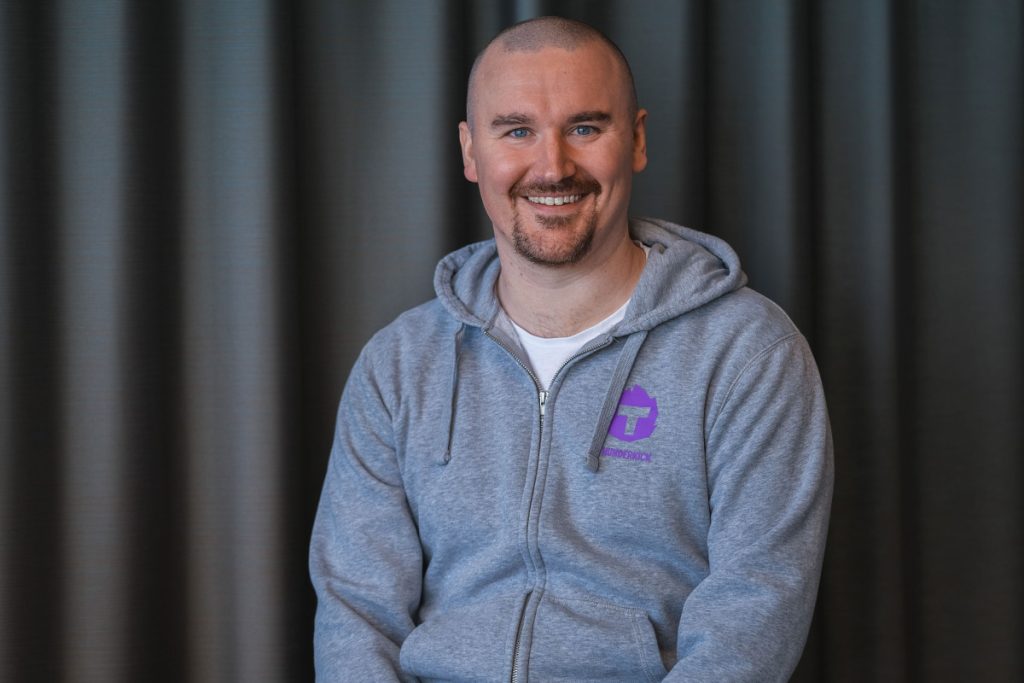
Mike Collins: Market considerations are usually baked in right from the concept stage. Regulations, player tastes, and even expectations around volatility differ so much across regions that it’s challenging to build a one-size-fits-all product.
Our core theme and features are designed with global appeal first, but early prototypes often leave space for regional variations. Later in the process, refinements focus on structuring math models to better resonate with local players.
iGX: Are there mechanics, like Hold & Win or progressive pots, that tend to appeal across the board, or do they still require regional fine-tuning?

KR: Mechanics like Hold & Win or progressive pots often have broad appeal. However, player preferences, volatility expectations, and regulatory rules differ by market, so even popular mechanics are adapted to resonate locally and comply with local requirements. For example, our games such as 3 Gates of Pyramid, 3 Fortune Trees, and 3 Hungry Pandas are particularly popular in CIS markets.
MC: For sure, some mechanics have a truly universal draw. Hold & Win and progressive pots are features players recognise and gravitate towards. That said, the way these mechanics are delivered often needs tweaking.
For example, in Eastern Europe, players often prefer higher volatility. In Latin America, smaller but more frequent wins tend to resonate more. Even when the mechanic remains the same, the frequency, reward profile, and visual framing – whether it’s mythology, sports, or cultural motifs – can create the feeling that a feature is tailor-made.
AG: Developing games for specific markets can produce unexpected outcomes. For example, Patrick’s Magic Field achieved success in Eastern Europe despite its holiday being unpopular there. Although game mechanics often stay the same across different areas, features like Hold & Win and Bonus Buy have widespread appeal.
We usually modify settings, characters, and visuals to suit local tastes, although altering core game features is more difficult. Tools like tournaments and Wheel of Fortune help boost player engagement while catering to regional preferences, but the fundamental mechanics stay effective across all markets.
iGX: How do you evolve a core feature to suit different player preferences without losing its identity?
MC: Keep the mechanic’s heart intact! If a feature’s core loop is about collection, that should remain unchanged. The delivery can be tuned, though, whether that’s adjusting reward frequency, layering in regional add-ons like re-spins or mini-games, or scaling multipliers differently.
Building features modularly so the same mechanic feels high-stakes and intense in one market but more gradual and approachable in another keeps its original intended DNA intact.
AG: Everything starts with the core feature, which we then improve using custom settings and promotional tools available to operators. The key is balance; we avoid overwhelming the player with unnecessary elements. Too much ‘noise’ in the interface can distract from the gaming experience.
To develop the core feature while catering to different player preferences, we analyse our performance data and design products that deliver the highest level of entertainment. Additional tools are integrated as interactive enhancements that increase engagement without distracting from the main game.
KR: Evolving a core feature starts with a deep understanding of the player and the market. We preserve the essence of each feature, keeping it exciting and recognisable, while adjusting elements such as volatility, hit frequency, visuals, and bonus structure to match local preferences. The key is balancing consistency with adaptability, so the feature feels familiar but always delivers the right experience for each audience.
iGX: What trends or behaviours stand out to you when comparing audiences in LatAm, Eastern Europe, and the US?
AG: The gaming landscape varies significantly across regions, each influenced by unique cultural preferences. In Latin America, football is a major attraction in both sports betting and iGaming, with games like Penalty Shoot-Out: Street becoming increasingly popular.
On the other hand, in Eastern Europe, slots dominate the market, accounting for over 80% of gameplay, and there is growing demand for sports-themed instant games such as Penalty Shoot-Out: Super Cup.
The US gaming market is strong right now, with slot machines leading the way, although sports betting, table games, and lotteries are also doing well. One interesting trend is the growing focus on gamification, which enhances player engagement and emotional ties to the games. This highlights how important it is to offer content that resonates with local audiences.
KR: Eastern European players tend to value higher volatility, immersive themes, and strong math-driven experiences. In sweepstakes, branded content, familiar mechanics, and straightforward gameplay often resonate most. Understanding these nuances helps us design slots that feel tailored to each market while staying true to our core quality and style.
MC: In Latin America, players often prefer fast, lower-stakes gameplay with frequent wins, and there’s a strong emphasis on mobile-first design and social engagement. In Eastern Europe, high-volatility slots with big-win potential remain a clear favourite, especially when paired with classic themes or jackpot mechanics.
Meanwhile, the US market has a distinct preference for branded IPs, licensed content, and land-based inspired gameplay, with bonus rounds that echo what players recognise from physical casino floors.
iGX: In your view, what does meaningful localisation look like in slots, beyond language and visual tweaks?
KR: Effective localisation focuses primarily on local players’ perceptions, making it essential to understand who is playing the game and what their lifestyle entails. Players may come from regions where quick gameplay and low minimum bets are popular, or they may be from areas that value high-quality graphics, immersive sound effects, and rich animations that prolong spin times.
Additionally, it is important to consider the cost and quality of internet access in that region, as well as the local regulations governing online gaming. Understanding these factors will provide a clearer picture of localisation, extending beyond just language and game themes.
MC: True localisation goes much deeper than translating text or reskinning artwork. It’s about tuning the game’s underlying math to fit local expectations. It also means weaving in cultural references through themes, sounds, or narratives that feel instantly recognisable to that audience.
And finally, it requires alignment with regulatory frameworks, ensuring that everything from stake limits to responsible gaming measures is not only compliant but also feels natural to the market.
AG: Meaningful localisation truly involves more than just language and visuals; it is the depth of this work that truly creates impact. Language is essential, as players need to clearly grasp the rules and interface, which is why we translate our games into over 20 languages.
Visuals are equally important. We adjust settings, symbols, and gameplay details to resonate with each market. ‘Visuals’ is a broad term; it encompasses everything that shapes a game’s tone and atmosphere. What may appear as minor modifications can often significantly influence how the experience feels to local audiences.