



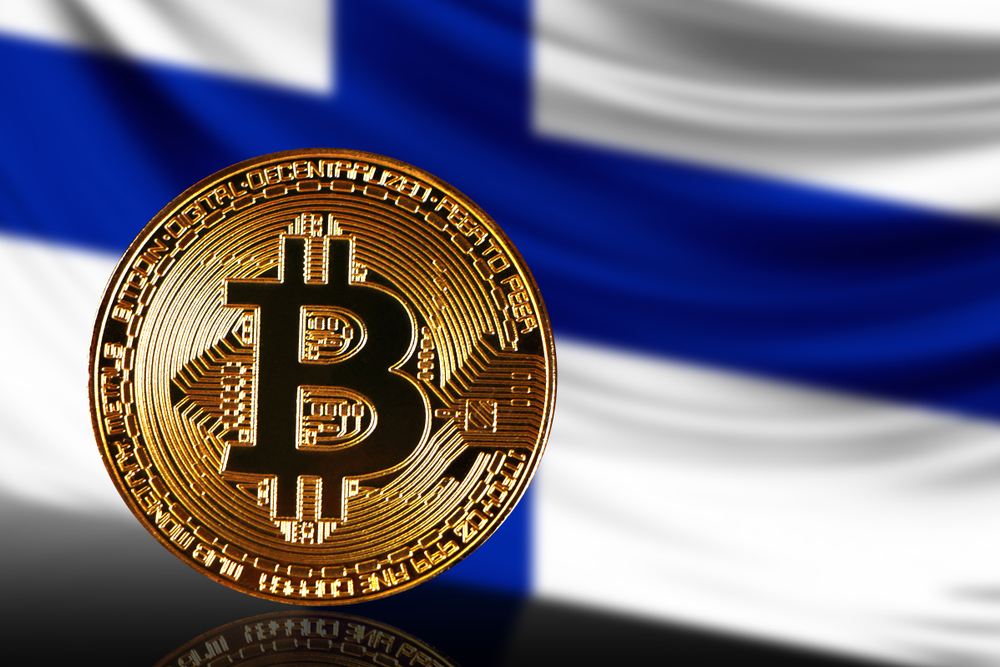
Solving the problem of channelisation is one that every regulated gambling market in the world has prioritised. When Finland goes live with its commercially licensed iGaming market next year, it will be no different.
It has been one of the main talking points amongst industry stakeholders as the country sets out its regulations, making sure players are directed away from unlicensed operators and to the licensed platforms. Everything from affiliate marketing, game variety and payment options plays a factor.
One area that has been highlighted as a potential major component in influencing channelisation rate is cryptocurrency payments, with many making the argument that they should be part of the regulation to keep players away from the black market. However, crypto payments are currently prohibited for licensed operators.
Jon Hautamäki, Partner at Nordic Law, has provided iGaming Expert with insight on the developing channelisation situation in Finland as the iGaming market prepares to open up beyond a monopoly, where crypto payments fit into the equation and what the future looks like for licensed operators.
The recent feature on iGaming Expert argued that Finland’s gambling sector should focus on the fight for affiliates rather than crypto. On the narrow point, that is largely right: on the available Finnish data, crypto-asset adoption appears limited compared to traditional payment instruments, and crypto payments are unlikely to be where the channelisation battle is won or lost. No operator should be deciding whether the Finnish market is worth entering on the strength of a crypto offering it cannot lawfully provide.
But the conclusion that crypto is therefore a non-issue is too simple – not because adoption is about to surge, but because of how the ban was constructed and what it reveals about the design of the framework as a whole.
Start with what the reform is actually for. According to the Government Proposal, the objectives of the new Gambling Act – preventing and reducing gambling harm, safeguarding players’ legal protection, and preventing gambling-related crime – are to be achieved specifically by improving the channelling of Finnish players to licensed operators.
Channelisation is less one objective among several than the mechanism through which every other objective is supposed to be delivered. The government’s own revenue modelling makes the same point in fiscal terms: it is built on channelisation scenarios of 80% and 90%. That is the bar, and the question is whether the framework, as designed, can clear it.

The difficulty is that Finland has layered four restrictions that each push players toward the offshore market they are meant to be drawn away from – the first three materially, the fourth at the margin: a prohibition on affiliate marketing, restrictions on search engine and social media marketing, a ban on bonuses in customer acquisition, and a blanket ban on gambling with crypto-assets.
Prohibiting affiliate marketing alone could materially reduce the system’s channelisation capacity. One can argue about the precise effect, but the direction is not seriously disputed. What has not been done, anywhere in the preparatory work, is an assessment of these measures operating together. Nordic Law made this point in our February 2025 statement to the Ministry of Social Affairs and Health in regard to the proposed player protection framework: the restrictions are cumulative, and their combined effect on channelisation has never been modelled.
Finland’s own proposal shows what re-regulation can achieve when the licensed offer is competitive. It cites channelisation rising from 71% to 93% in Sweden, and Danish online channelisation increasing by close to 30 percentage points after licensing. Those figures offer the benchmark for the Finnish reform. They are also the case against handicapping the operators who are supposed to reproduce them. A market cannot import the Swedish and Danish channelisation outcomes while withholding the acquisition tools – affiliates, bonuses, digital marketing – that Sweden and Denmark allowed.
Veikkaus’s online channelisation declined materially over the past decade, and that decline is precisely what prompted this reform. The lesson of that decline is that a dissatisfied player switches to an unlicensed site with very little friction and is very hard to win back. A framework serious about channelisation should be removing that friction for licensed operators, not adding to it. None of this is to question the harm-prevention rationale behind the restrictions. But deposit limits, self-exclusion and supervised marketing protect only the players who stay inside the licensed system – a restriction that pushes them offshore fails on its own harm-prevention terms, not just on channelisation.
Finland iGaming’s crypto ban
So where does crypto sit in this? Lower down the list than the marketing restrictions, and I would not advise any operator to treat it as a decisive factor. But the ban is worth examining because it is the clearest illustration of the design problem that runs through the framework. The prohibition applies to crypto-assets as a category, by reference to the underlying technology, rather than to the regulatory status of the asset.
Under EU law, e-money tokens regulated under MiCA are treated on a par with electronic money for payment purposes. A prohibition that sweeps a MiCA-regulated e-money token into the same category as an unregulated token is difficult to reconcile with the principle of technology neutrality. Nordic Law made this argument in our 2024 consultation response to the Government Proposal; the legislature retained the ban but softened the language on this point, citing the still-developing state of crypto regulation and AML concerns. That rationale was debatable then. It is harder to sustain now that MiCA has been fully applicable since the end of 2024.
To be fair, the regulator does have a point on AML and safeguarding, and the credible version of the crypto argument has to account for it. Crypto-assets do raise traceability and source-of-funds questions, and an authority building a supervisory system from scratch is entitled to be cautious. But cautious is not the same as prohibited. And the technology operates both ways: on-chain analytics have matured to the point where blockchain transactions are often more traceable than cash, and in some respects more auditable than the e-wallet structures already permitted in licensed gambling.
The anti-money-laundering obligations that apply to crypto-asset service providers under MiCA, the Transfer of Funds Regulation and the EU AML package are the same identification and transaction-monitoring duties that already apply to traditional payment service providers. The Finnish financial sector manages these risks as a matter of routine; entities supervised by the Financial Supervisory Authority use AI-based tools for anti-money-laundering, fraud and credit-risk work every day. The safeguarding concern is real, but it argues for regulating crypto payments carefully rather than a blanket exclusion that simply relocates the activity offshore, where there is no Finnish oversight at all.
Crypto is a question the framework will have to answer eventually – just not the one that decides whether the reform succeeds.
Jon Hautamäki, Partner at Nordic Law
Whether Finland revisits any of this is another matter. My expectation is that the crypto ban and the bonus restrictions are the two provisions most likely to be reopened once the market has run long enough to generate channelisation data. Both sit awkwardly against the reform’s own objective, and both are the kind of measure that looks defensible in the abstract and harder to defend once the offshore retention numbers arrive.
The legal pressure on the crypto ban in particular will only grow as MiCA beds in. But revision will follow evidence, not argument, and that evidence does not exist until the market has been live for some time. Operators should plan for the framework as it stands, while recognising that those who are licensed and inside the system when the review comes will have the most influence over how it changes.
Which leaves the question that matters most: can the regulated market compete with the black market? It can, but not in the current settings. The single most effective lever is neither crypto nor any one specific marketing rule. Finland’s own proposal identifies the suppression of unlicensed supply as the most effective and cost-efficient way to raise channelisation. Combine that with a marketing regime that lets licensed operators actually reach the players the unlicensed market currently holds – that is where channelisation will be decided.
Crypto is a question the framework will have to answer eventually – just not the one that decides whether the reform succeeds.
Jon Hautamäki is a Partner at Nordic Law Oy, a Helsinki-based law firm that specialises in fintech, Web3 and gambling regulation. Back in March, Nordic Law provided iGaming Expert with a deep dive into the regulatory direction of Finnish iGaming.