


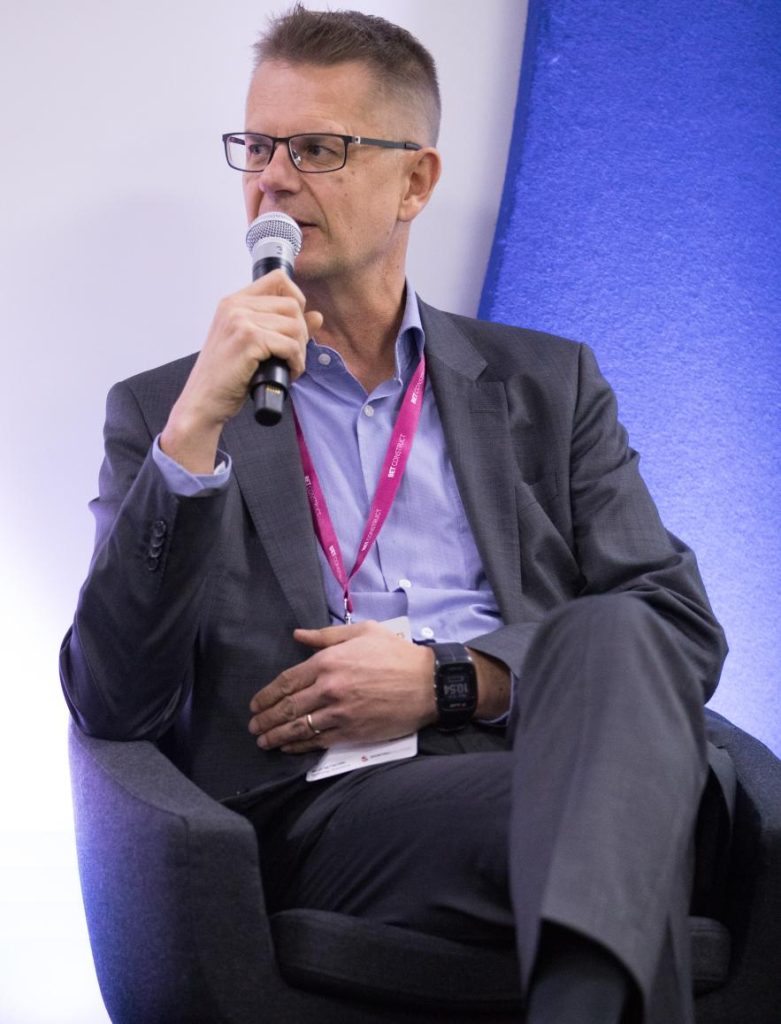
Jari Vähänen, Co-Founder & Partner at The Finnish Gambling Consultants, spoke to iGaming Expert about the upcoming commercially licensed Finnish Gambling market, the key challenges awaiting operators entering the country, the future of state-owned operator Veikkaus, and whether the market’s legislation will be revisited soon.
Vähänen will be speaking at SBC Summit in Lisbon later this year on 29 September during the panel titled ‘Finland’s waiting: The start of a new European market’ on the Regulation & Compliance stage.
Where are we currently in the regulation process for Finland’s commercially licensed iGaming market?
The license application process began in March. Currently, more than 50 licenses have been applied for. Based on this, I estimate that 80-100 licenses will be applied for, which is about double the original estimate. The authority has not yet granted any licenses.
Is it fair to compare Finland’s iGaming to neighbouring countries in Scandinavia? Are there any mistakes that Finland could learn from its neighbours?
In Finland, we are used to comparing everything to the Swedish equivalent, so the reform of gambling legislation also sought to learn from Sweden’s and Denmark’s experiences.
Finland’s future model is not a direct copy of Sweden, but it is very similar. Part of Finland’s new gambling law is a copy of the current law. This poses challenges because what works in a monopoly does not necessarily work in a competitive market.
Hopefully, Finland will invest significantly more in monitoring and preventing unlicensed operators than Sweden has done.
What do you believe will be the key challenges facing operators who are licensed in Finland in time for launch day?
At least three things come to my mind. The gambling habits of Finnish customers are different from those in neighbouring countries. There are quite a few gambling industry professionals in Finland who can help new companies in this regard.
Another factor is the limited media and top-level sports in Finland, which is why acquiring visibility can be challenging for those who have not yet started the contracting process. The third factor is the vagueness of the legislation.
Quite a lot is left to the regulator’s interpretation, and not everything will be clear before operations under the new law begin.
Channelisation has been a hot topic in the Finnish iGaming discussion recently. What can be done to ensure channelisation rates are maximised as the market opens up?
The legislation is what it is, and any changes will likely only be made after a few years of operation. It is particularly problematic for digital casino operations that affiliate marketing and welcome bonuses are prohibited.
Given the high degree of channelisation, it will be critical to assess how effectively the regulator prevents unlicensed operations.
Affiliate marketing will be prohibited for Finland’s iGaming operators. What can be done to mitigate the impact this could have on channelisation rates?
Although affiliate marketing is completely prohibited by law, I don’t think that current affiliates will disappear completely. According to the law, for example, digital media similar to print media can be used as marketing channels for gambling activities.
I believe that some of the current affiliates will move into the media business and adopt new pricing models.
How likely do you think it will be that Finland considers reversing its regulation on affiliate marketing, crypto payments and bonus restrictions in the near future?
I am almost certain that there will be a second phase of legislation. However, I do not believe the law will change very quickly. The new Finnish government will take office in the summer of 2027, and its term of office will end in the summer of 2031. I believe that the changes to the legislation will be made before the end of the next government term.
The content of the legislative change depends on at least two things, namely the channelisation rate and the number of gambling problems. If the channelisation rate remains lower than expected and the number of problems does not increase, then I expect relaxations, at least affiliates and possibly welcome bonuses, in the legislation.
If the number of gambling problems increases, then stricter restrictions in the legislation are possible.
There are reports that state-owned operator Veikkaus could go public. Is this the right direction to take as the market opens up?
The state currently owns 100% of Veikkaus. No official decisions have been made on the privatisation of Veikkaus. I assume that the owner first wants a few years of experience in the new market before making final decisions.
In principle, at least the privatisation of part of Veikkaus, which is moving to the gambling-license business, would be justified, because the state acts as a legislator, regulator, and owner of a regulated company. This seems like a situation where a conflict of interest will be possible.
You’ll be on a panel talking about the Finnish license application process at SBC Summit. With your experience, what would you say is the most important factor possible licence holders need to know about Finnish iGaming?
Of course, it is worth knowing Finnish legislation, license conditions and technical requirements. In addition to the Gambling Act, it is important to understand, for example, taxation-related issues.
In recent years, I have emphasised the importance of knowledge of Finnish gambling behaviour. My former company, Veikkaus, controls the Finnish market and player base very well. It is critical to understand the market that many of the licensees are entering for the first time.
Held in Lisbon from 29 September to 1 October 2026, SBC Summit is one of the world’s largest gatherings of betting and gaming professionals.
The event will bring together 40,000 attendees from across the industry for three days of learning, networking, and discussion, alongside a major exhibition featuring leading brands from around the globe.
For more information and tickets, visit sbcevents.com/sbc-summit.