




When Elantil’s Head of Marketing, Tereza Melicharkova, asked for a deeper understanding of what makes Elantil technically different from other platforms, she set up a call with Jonathan Gauci, Founder & CEO.
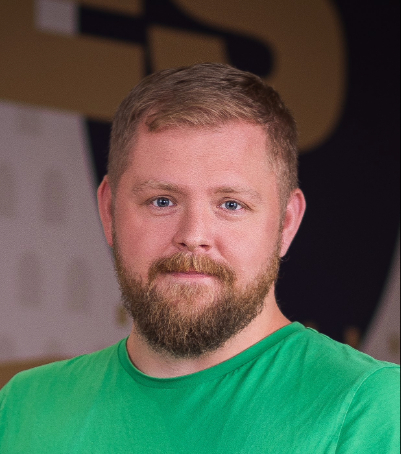
Jonathan invited his friend Matúš Barna, a seasoned sportsbook architect who has built tier-one platforms for major European operators, to join the conversation and share his perspective from an operator’s point of view.
What followed was a candid, no-fluff discussion about the problems facing operators today, and how Elantil’s architectural backbone changes what’s possible.

TM: Most platforms claim to be modular or scalable. So let’s start simple: what’s the real problem Elantil is solving?
JG: The problem is sameness. Most platforms deliver identical experiences. They sell speed to market but at the cost of flexibility. Operators get a turnkey system that looks good on day one, but over time it boxes them in.
If you’re not generating the right revenue, it’s usually because you’re offering the same thing as everyone else. Elantil was built to give operators tools to build differently, without starting from scratch.
TM: And from an architectural perspective, why do operators get stuck with those limitations?
MB: Because most operators don’t really control the architectural backbone of their platform. They might manage hosting, but not the core systems such as wallets, sessions, data models, and integration layers.
When you want to change something fundamental, for example, adjust wallet logic or rework an event pipeline, you can’t. You have to wait for vendor approval or their next release cycle. Every change becomes a negotiation instead of an engineering decision. It kills agility.
I’ve seen that happen repeatedly in large enterprise environments. You lose control over the things that actually define your business.
TM: So when you say Elantil is different, what does that actually mean in practice?
JG: It’s a non-opinionated, modular architecture. We don’t dictate how an operator should run their business. They can integrate, extend, or configure every part of the system.
We give full access to APIs, SDKs, and system events, everything you need to look under the hood and work directly with the system’s guts. It’s self-hosted, so you can configure it as if it were your own PAM. No vendor lock, no waiting for permission to evolve.
Matúš: When I reviewed the architecture, I expected the usual compromises, the hidden coupling, the rigid domain models, but they weren’t there. The separation of domain logic from execution and the use of the actor model solves scalability problems I’ve been fighting for years.
The system doesn’t force you into a predefined way of working. You can bring your own tools, your own data, even your own AI models, and it all fits naturally. That’s what a true backbone looks like.
TM: Let’s talk about large operators. What’s the pain point they usually face when scaling?
Matúš: For tier-one operators, the issue isn’t physical infrastructure — it’s architectural control. Even when they have their own hosting, the core services are often locked.
The moment your wallet, session handling, or integration layer becomes too rigid, you lose control of your product roadmap. You can’t adapt, and your teams start shaping the business around someone else’s architecture. That’s how companies fall behind.
Tech debt doesn’t explode overnight; it builds one dependency at a time. A closed data model here, a proprietary connector there, and suddenly a simple feature takes six months. That’s the reality for most big operators.
Jonathan: Elantil breaks that pattern. We designed it so you can control your own evolution, modify flows, automate logic, and add integrations, all without needing to go through us. We provide the backbone, you shape the outcome.
TM: How does Elantil handle AI and automation differently? Everyone claims to be AI-ready.
JG: Most platforms allow AI to observe data but not act on it. Elantil’s event-driven architecture allows external systems to directly influence the PAM and back-office in real time.
AI can make operational adjustments automatically, for example, personalisation or segmentation logic, without waiting for human approval. It’s built to allow AI to work natively.
Matúš: Exactly. I’ve seen operators spend months building AI systems that could predict player behavior, but they couldn’t plug them into their PAM. The AI could see the data but couldn’t act on it.
With Elantil, that barrier doesn’t exist. The openness of the architecture means automation and AI become part of the daily workflow, not side experiments.
TM: If you had to summarise what Elantil really gives operators, in one line?
JG: Control. True control.
Matúš: Freedom to build without friction. Most platforms try to box you in; Elantil gives you the space to grow. That’s what tier-one operators need if they want to lead, not follow.
TM: From a marketing perspective, this conversation highlights something important. Elantil’s strength isn’t just in technology; it’s in philosophy. It’s designed for operators who want independence, flexibility, and long-term growth, not just a quick setup.