

Gambling stakeholders in the Netherlands have called on the Dutch government to urgently shift its approach to taxation warning the current plans are ‘counterproductive’.
Trade associations Vergunde Nederlandse Online Kansspelaanbieders (VNLOK) and VAN Kansspelen, as well as operators Nederlandse Loterij and Holland Casino, have sought to bring awareness of the consequences of the current taxation rate to the House of Representatives, which is resulting in lower revenue, driving players to the black market and reducing funds for social causes.
An action plan has been issued by the trade bodies and operators to tackle the decline in tax revenue, including timely evaluations, results incorporation and future policy consideration.
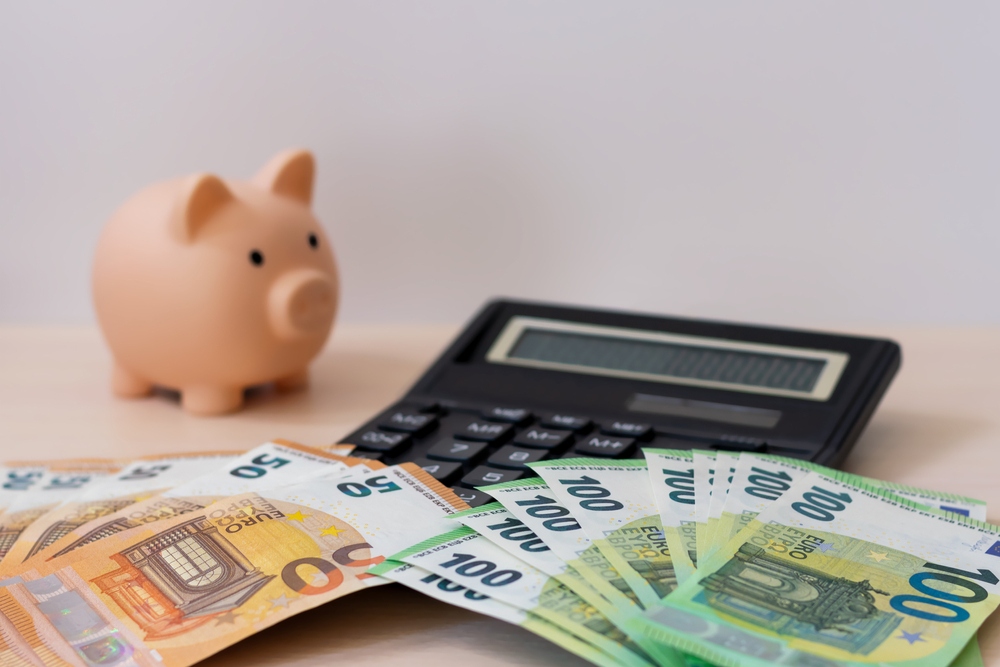
Government officials are set to discuss taxation in a committee debate on 11 March. The gambling tax has gradually increased in the Netherlands over the past few years, rising from 30.5% to 34.2% in 2025 and to 37.8% in 2026, although VNLOK noted that the latest increase is still pending.
VNLOK noted that, according to data from the Dutch gambling authority Kansspelautoriteit (KSA), approximately €40m less in gambling tax is to be collected in 2025 in comparison to the previous year, while €43.5m less online gambling tax was paid compared to the previous year.
Björn Fuchs, Chair of VNLOK, commented: “The government is trying to generate additional revenue with this measure, but is achieving the opposite. We are seeing lower tax revenues, more illegal offerings, and less money for sports and charities.
“This is not only financially unwise, it also undermines the policy of protecting players. The player is the victim of this policy.”
The trade body also cited the KSA analysis that showed that illegal gambling outnumbered legal gambling in the first half of 2025.
In addition, VNLOK noted how funding to the Dutch Olympic Committee*Dutch Sports Federation (NOC*NSF) projects has been impacted, claiming that contributions drop by approximately €2.5m for every gambling tax percentage point increase. NOC*NSF has estimated that the current increase costs the sports sector €12.5m to €15m.
VNLOK, VAN, the Dutch lottery and Holland Casino have sent three requests to the Government:
- Send promised gambling tax evaluation to House of Representatives no later than Q2 2026.
- Incorporate results into decision-making, including a reconsideration of increases.
- Explicitly consider relationship between tax burden, illegal supply, player protection and social contributions in future policy.
Illegal market crackdown
Tackling illegal gambling operators was one of the five key themes outlined by the KSA in its supervisory agenda for 2026, alongside protecting vulnerable groups, supervising the duty of care, supervising advertising and supervising compliance with the Anti-Money Laundering and Anti-Terrorist Financing Act (Wwft).
It is also part of the government’s recently published coalition agreement, proposing a ban on online gambling advertising, strengthening online operators’ duty of care, cracking down on illegal gambling sites and exploring limiting the number of online operator licences.
However, VNLOK has been outspoken about the online advertising ban, noting that while it shares the government’s goal of improving protections for players and combating the black market, it is encouraging a rethink on how to approach the matter.
“Dutch gambling policy is deliberately designed around an open, regulated market with strict requirements for duty of care, advertising and oversight,” said Fuchs.
“This system only works if the legal, safe offering remains visible to the player. A total ban on advertising undermines precisely that principle.”