




The iGaming content landscape is undergoing a structural shift. Where once a single studio defined a supplier’s output, a growing number of companies are rethinking how they organise creativity, technology and distribution – and the studio ecosystem model is emerging as the answer.
This roundtable brings together Dima Reiderman, CCO at RubyPlay, Ivan Kravchuk, CEO at Evoplay, and Or Shavit, Chief Studio Officer at Games Global, who have each built a framework that unites multiple studios under a shared technology and distribution spine. fTogether, they explore why the ecosystem model is gaining momentum, how it balances creative independence with operational cohesion, and what it ultimately means for partners and players.
What’s driving suppliers to move away from the single-studio model and why is now the right time for this shift?

Dima Reiderman: A few things are happening at once. The most fundamental one is creative convergence. A single studio, no matter how talented, will eventually gravitate toward a house style – same mechanics, same aesthetic instincts, same creative comfort zone. It’s not a people problem, it’s just what happens. Multiple studios with independent creative heads break that pattern. Five studios, five distinct creative identities, each built around its own leadership, vision and product philosophy.
There’s also a market reality driving this. Regulated markets are too different from each other now to build for “the global player.” Studios that are designed around one or two markets from the start make sharper product decisions than those trying to serve everyone and localising at the end.
And honestly, timing is about readiness. You can’t do this before you have the commercial foundation, the infrastructure, and the strategic alignment at leadership level. For us, those things came together. The decision was made, and the model followed.
The goal wasn’t to create more game teams. It was to build an ecosystem of specialised studios that could pursue different opportunities while benefiting from a shared platform.
Ivan Kravchuk: At Evoplay, we see this as a natural stage of our growth. More broadly, the industry is increasingly focused on scalability and localisation, making flexible operating models more relevant than ever. As we expanded, we reached a point where the single-studio model started to create certain limitations. We had to choose between different priorities, whether related to product directions, markets, or audiences.
An ecosystem gives us more flexibility. Different studios can pursue different opportunities simultaneously while still benefiting from Evoplay’s technology, expertise, and infrastructure.
This is particularly important when it comes to localisation. Markets are becoming more diverse, and player expectations differ significantly across regions. The ecosystem model allows us to go deeper into those markets and build products that are more relevant to local audiences.
There was no single trigger for this move. We’ve reached a point where evolving into an ecosystem became the logical next step in Evoplay’s development.
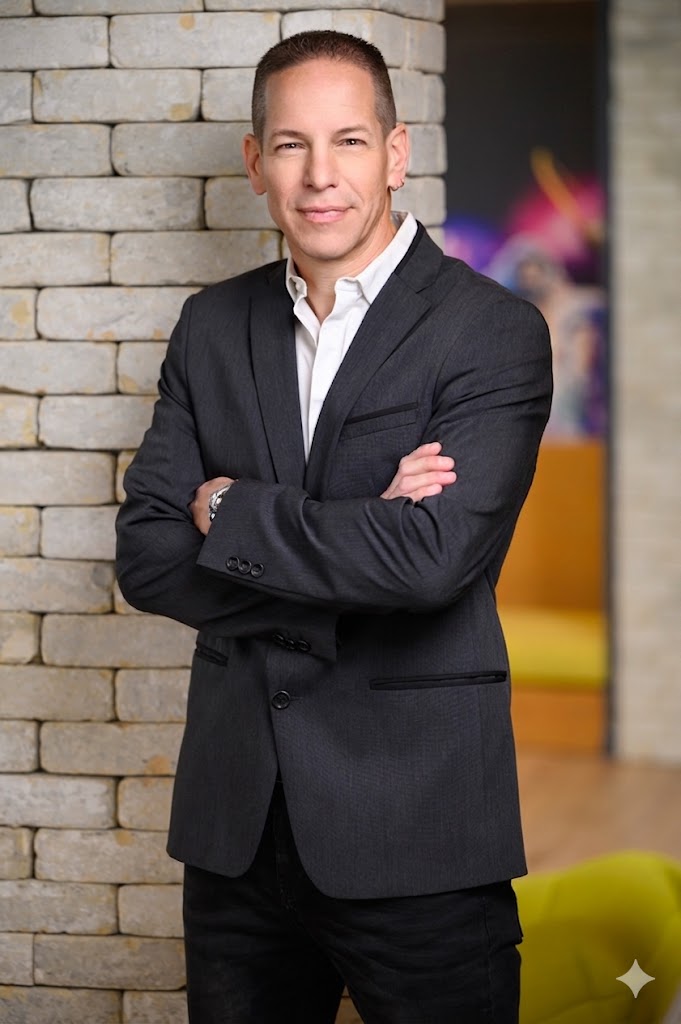
Or Shavit: The iGaming industry has grown to a point where no single studio can cater to every player segment, market, mechanic and content style across the globe. By bringing together multiple studios into one ecosystem, suppliers can offer operators a broader and more differentiated range of content under a single integration.
This is especially important as competition for player attention intensifies and operators look for ways to stand out. The model gives them more choice without adding operational complexity, while allowing each studio to focus on what it does best. The key is not just producing more games, but creating a stronger, more balanced portfolio.
A recurring theme in this model is giving individual studios creative freedom while keeping them on shared technology and distribution rails. In practice, how do you manage that balance?
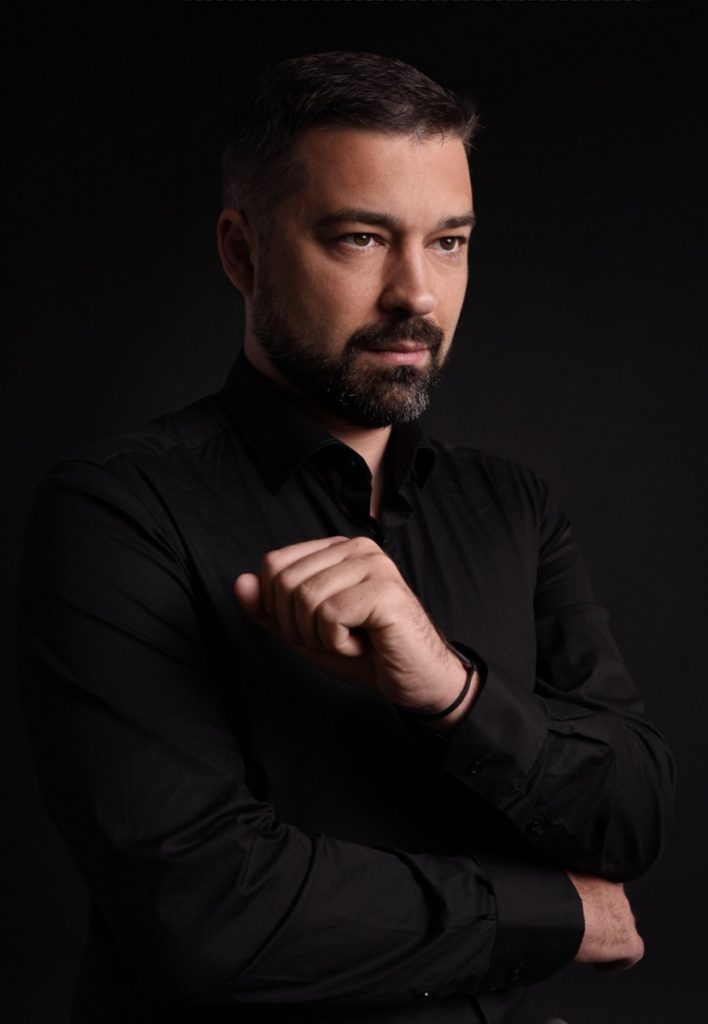
IK: We manage that balance by being very clear about what stays consistent across the ecosystem. For us, this means shared technology, infrastructure, and quality standards.
All games within the ecosystem are built on our technology stack, which is important because it allows everything to work together efficiently and gives studios access to the tools and services we’ve developed over the years.
Beyond those foundations, we encourage studios to think differently. The purpose of the ecosystem is to bring together diverse ideas, creative approaches, and expertise.
One of the biggest challenges of scaling is making sure you don’t lose the identity, quality, and direction that helped us grow in the first place. For us, the ecosystem model is designed to scale creativity without compromising those fundamentals.
The goal isn’t simply to produce more content. It’s to create an environment where multiple teams can explore new ideas in parallel while operating on a shared foundation that maintains quality and consistency.
OS: Games Global has more than 30 in-house and partnered studios, and our focus is to provide the infrastructure, insight and distribution that allow creativity to thrive. It is not about taking away the studio’s identity or telling every studio what to work on. It is about creating clear strategic guardrails and the right technical foundations.
We work closely with each studio, sharing operator insights, player trends and performance data, while they bring their own ideas, concepts and creative strengths. That dialogue helps ensure we are aligned around the same commercial objectives, while still preserving the unique identity of each studio.
DR: It works cleaner than people expect, and the reason is simple – the boundaries are clear. Shared infrastructure covers everything that would be a distraction from making games: technology, compliance, distribution, commercial. That’s centralised and that’s final. No studio head should be worrying about aggregator integrations or certification pipelines.
Creative autonomy starts at the design stage and is total from there. Concept, mechanic, theme, maths – that’s entirely the studio’s call. No committee, no approval from the centre.
Each studio is expected to build its own creative DNA rather than follow a centralised product vision.
What keeps it working is two things: the structural clarity itself, and a culture that actually respects it on both sides. The centre stays out of creative. The studios trust the shared infrastructure. When the lines are that clear, there’s genuinely nothing to fight about
How does your model influence product decisions, whether that’s mechanics, themes, or the way you respond to shifts in player behaviour or market trends?
OS: One of the biggest advantages of an ecosystem is the ability to share proven ideas, insights and learnings across multiple studios while still encouraging innovation. Power Combo™, for example, has become one of our network’s most popular mechanics and has been used across more than 60 unique games, including content from Just For The Win, Foxium, Wishbone and Fortune Factory Studios. Similarly, the King Millions™ progressive jackpot network has integrated titles from Gameburger, Slingshot and Triple Edge Studios.
The important point is that this is not about simply repeating the same idea. It is about understanding what works, why players respond to it, and how each studio can build on that learning in a way that still feels distinct.
DR: When a studio is focused on one or two markets, the quality of product decisions goes up significantly. You’re not trying to read twenty markets at once – you’re close enough to one player base to actually understand what’s moving, what operators are asking for, what’s missing. That shows up in better briefs, smarter mechanic choices, more relevant themes. Less noise, more signal.
The benefit also comes from having multiple studios approaching game development from different perspectives, creating a broader range of mechanics, themes and player experiences.
On trends, we have a shared data layer across studios. What’s performing, what’s not, what players are responding to – that circulates. So, you get studios that are independently focused but collectively informed. The specialist’s depth plus the pattern recognition of a larger organisation.
That combination is what really drives product quality in this model.
IK: In many ways, the core product development process doesn’t really change. Product development still starts with understanding players, analysing data, identifying market needs, and building games around these insights.
What changes is the range of opportunities we can pursue simultaneously. Previously, we might have had to decide whether to focus resources on one market or another or choose between different product directions. With an ecosystem structure, multiple teams can address different challenges in parallel.
Some studios bring their own expertise and vision. Others rely more heavily on the data, knowledge, and support we provide. One of the advantages of the ecosystem is that studios can tap into the market intelligence, performance insights, and go-to-market experience we’ve built over the years, while still contributing their own ideas and strengths. In practice, it’s a combination of both, which gives us much more flexibility in responding to changing player preferences and market trends.
What does the ecosystem model change for an operator partner?
DR: It changes two things at once, and that’s what makes it interesting.
First, depth. Operators in our focus markets now have a studio that is genuinely thinking about their players – not as one segment in a global brief, but as the starting point for every product decision. Content arrives already calibrated, not adapted after the fact.
Second, global reach. Every game we make, from every studio, goes out across our full distribution footprint. Great content travels – a game built for one market can become a top performer somewhere completely different. Operators get the full catalogue, not just what was made for their region.
The ecosystem also allows us to support different operator needs through specialised studios. Firerose®, for example, focuses on bespoke, branded and fully white-label content, helping operators extend and strengthen their own brand through tailored gaming experiences.
So, it’s focused relevance and global variety in one relationship. That’s a different conversation than a standard content deal. It’s more like a content partnership.
IK: From an operator’s perspective, the experience remains familiar. We’re not looking to make partnerships more complicated.
What changes is the scale of what that partnership can deliver. As the ecosystem grows, we’ll be able to offer a broader range of content and, in some cases, products that are more closely aligned with specific markets or player groups.
For operators with a presence across multiple regions, this creates additional opportunities without changing the way they work with us day-to-day.
The goal is simple: more choice, more relevance, and more value, while keeping the relationship as straightforward as possible.
OS: The model offers operators greater choice without greater complexity. From a Games Global perspective, that’s over 1,400 games available through a single integration, enabling casinos to better service varying player preferences without the resource-intensive burden associated with managing multiple supplier relationships.
It also allows operators to react to content trends in real time to capitalise on cultural moments. For example, Games Global’s network developed a diverse pipeline of football-themed games – spanning slots, live casino and crash – ahead of the World Cup, giving our partners access to timely content designed to maximise engagement. Ultimately, the goal is to equip operators with the tools they need to engage and retain their audience.
How do you approach regional differentiation and how do you know when a market warrants its own dedicated focus?
IK: We look at a combination of factors, including player behaviour, market maturity, growth potential, and how distinct that market is from others. Some markets have a lot in common and can be approached similarly. Others require a much more specialised strategy because player preferences, engagement patterns, and content expectations vary widely.
The more distinct a market becomes, the stronger the case for dedicating attention to it. Brazil is a good example. What works there doesn’t always translate directly to Europe, and even within Europe, there are significant differences between regions.
An ecosystem structure gives us the ability to respond to those differences more effectively, allowing multiple teams to focus on different market contexts while still operating within a shared framework.
We’re still at the beginning of that journey, and we see it as a long-term evolution rather than a short-term change. Our focus is on growing the ecosystem in a way that preserves the quality, consistency, and trust operators already associate with Evoplay.
OS: While some franchises have universal appeal, every market and its players are different. Localisation goes beyond language adaptation. It means understanding local player preferences, operator needs, regulation, themes, mechanics and the overall market context.
This is an important part of Games Global’s strategy, particularly in emerging regions such as Latin America. We combine operator feedback and performance data with local insight from our South America-based studios, so content is not just translated but genuinely relevant. The ability to scale globally is a major benefit of the ecosystem, but effective localisation is just as important.
DR: It’s a strategic decision, not a reactive one. The criteria is pretty clear: market size, regulatory maturity, trajectory, and competitive landscape. A market needs to be large enough, stable enough in its regulatory framework, and heading in the right direction. We’re not speculating on markets that might mature – we’re committing to ones where the fundamentals are already there.
The competitive angle matters too. We look for markets where depth of understanding creates a real advantage – where knowing the player and the operator better than anyone else actually translates into performance. And where we believe our content is the right fit to win. Not every market rewards the same type of product. We focus where we think we can genuinely stand out.
The studios don’t choose their markets. Leadership sets the strategic focus, studios execute against it fully. That clarity is actually a big part of why the model works.