





Turkey’s gambling crisis has been weaponised against President Erdoğan and the AKP government, as the main opposition CHP calls for a full system overhaul to bring accountability across all gambling stakeholders, including state-owned monopolies, banking and private entities.
President Recep Tayyip Erdoğan has been told to “face reality” and recognise that the AKP government has “lost control of gambling and its social harms on Turkey”.
Yesterday, the Republican People’s Party (CHP) presented a “counter plan to combat Turkey’s gambling crisis, impacting the economy, youth and families.”
A matter that generates weekly negative headlines for the ruling Justice and Development Party (AKP) has been seized upon by the CHP as it intensifies pressure on Erdoğan’s 21-year grip on power.
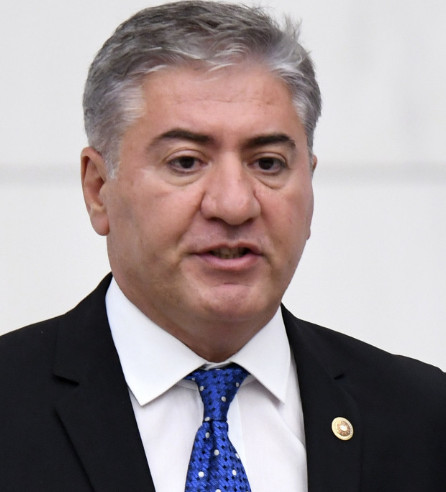
CHP Deputy Murat Emir and council member Ozan Bingöl told Parliament that their action plan aimed to “cure a profound crisis that has begun under the AKP’s watch”.
Emir delivered a blunt assessment of how gambling has been normalised under the current AKP regime, describing it as no longer a marginal social issue but a “full-scale public health and security emergency.”
“Gambling and betting are not just individual mistakes, they have become a deep public health problem and a national security crisis,” he said. “This system is destroying families, pushing young people toward suicide and pulling society into a shadow economy.”
Central to the CHP’s criticism was the accusation that the AKP has systematically underestimated youth gambling, allowing exposure to begin through legal, state-sanctioned gambling products before escalating into illegal online betting networks.
Emir warned that smartphones have effectively created “casinos in every pocket”, drawing teenagers into gambling ecosystems with little meaningful intervention from authorities. “Today children in their early teens are gambling on mobile phones,” he told lawmakers.
“What the government calls legal gambling is actually the gateway to illegal betting. They learn there, they start there, and then they are pushed into criminal platforms.”
The CHP also argued that for nearly two decades gambling addiction was quietly pushed onto civil society organisations, particularly Yeşilay (The Green Crescent), while AKP leadership avoided addressing the issue at a political level.
Emir said the government preferred to frame gambling as a revenue source rather than confront its growing social damage. “For years this problem was left at the door of charities,” he said. “The state never treated gambling as a social threat — only as a source of tax income.”
State-owned monopolies of IDDAA and Milli Piyango are in the line of fire, with CHP accusing their platforms of normalising gambling behaviour and feeding illegal markets. According to Emir, the state permits gambling, tenders it, taxes it and profits from it, while simultaneously claiming to combat illegal betting. “Everyone knows the legal system is what fuels the illegal one,” he said.
Backing enforcement agencies as the frontline in dismantling the illegal gambling economy, the CHP said the Financial Crimes Investigation Board (MASAK) must be significantly strengthened to lead the fight against money laundering, account-rental schemes and criminal betting networks.
Emir warned that without a financial crackdown, illegal gambling would continue to thrive regardless of site blocks or arrests. “Unless we crush the laundering of billions flowing through these systems, our youth will keep carrying casinos in their pockets,” he said.
Beyond tougher enforcement, the CHP outlined what it described as a full regulatory reset for Turkey’s gambling sector.
The party called for fragmented legislation to be merged into a single comprehensive Gambling Law, the creation of a new Gambling Regulation and Supervision Authority, and a fundamental shift away from treating gambling as a treasury income stream toward recognising it as a public health issue.
Expanded rehabilitation services and greater financial support for addicts and their families would form a central pillar of this new approach.
Crucially, CHP leaders pledged to open a parliamentary investigation into the AKP’s two-decade management of gambling, covering both the expansion of legal betting and the failure to contain illegal platforms.
A scathing criticism of Erdoğan’s presidency which has relied on gambling as state-backed revenue model, allowed legal systems to act as “the on-ramps into criminal markets”, tolerated the growth of money-laundering networks and looked away as youth gambling exploded through mobile technology.
Closing his speech, Emir framed the crisis as one that transcends party politics and threatens Turkey’s social fabric. “We are facing the risk of losing an entire generation,” he said. “The state’s duty is not to normalise gambling to collect more taxes — it is to rescue young people and protect the future of society.”
It appears that every move made by the AKP on illegal gambling will face intense scrutiny, as President Recep Tayyip Erdoğan demands visible enforcement and rapid results from Turkish authorities.
For the CHP, gambling has become a pressure point in its wider challenge to AKP rule. The opposition is expected to relentlessly hold Erdoğan’s government to account, sensing vulnerability in what it frames as one of the weakest policy failures of the past 23 years as Turkey’s gambling fallout becomes a frontline battle of the next election.