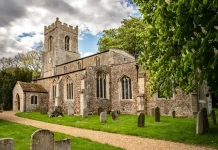




One of France’s leading casino groups is embroiled in a surreal case against a local authority in northern France over a building that it owns.
The ongoing litigation between Groupe Partouche and the municipality of Berck-sur-Mer in northern France has now gone far beyond being a simple local dispute over a casino. It highlights, in a manner that is particularly worrying for casino operators, the recent extension of the French theory of a concept called bien de retour (which translates as ‘returnable asset’), a legal mechanism that is specific to public service concessions, which is the system under which French casinos operate.
The conflict between Partouche and the city in the Nord-Pas-de-Calais region could have serious repercussions on the regime governing these returnable assets following a recent decision by the Conseil d’État, the highest administrative authority in France. In theory, it could be used by public authorities to capture private assets belonging to third parties operating a public service concession. Although such scenarios would be extreme, they would not be impossible.
Several proceedings are also pending before the courts regarding ownership of the building, while various avenues of appeal remain open, including at a European level.
In summary, after 34 years of operating the casino, the licence of the establishment’s operator, a subsidiary of Groupe Partouche, was not renewed by the municipality of Berck-sur-Mer, and a new operator, the Belgian group Infiniti, was selected as the licensee.
The dispute has one key feature.
The building in which the casino operates was acquired in 1997 by Partouche and then leased to the company operating the casino (the Partouche subsidiary). The question is therefore whether this private building belonging to a third party can be regarded as a ‘returnable asset’ at the end of the concession.
Explainer
Casinos in France operate under public service delegations (DSP). Under this framework, gambling operators are granted the right to operate a casino for a fixed period and are required, under the terms of the tender specifications, to offer a range of cultural and leisure activities in addition to gambling; including restaurants, leisure and cultural events such as concerts.
Real money gambling in France does not in itself constitute a public service. However, the activities developed around these establishments are considered to give the contract the nature of a public service delegation.
Since acquiring the property, signing the lease and operating the Berck-sur-Mer casino in the late 1990s, Partouche claims to have invested significantly in transforming this property into a casino and a venue for activities in the seaside resort.
Reversal of case law
On 17 July 2025, in an emergency interim ruling, the Conseil d’État stated for the first time that assets belonging not to the concession holder itself, but to a third party, could be classified as returnable assets when two conditions are met: the existence of close economic ties between the owner (of the building) and the concéssionaire, and the exclusive use of the property for the operation of the concession.
For many legal experts, this solution represents a major departure from past practice. Even though the concession holder in this case is a Partouche subsidiary, the Conseil cannot presume that it consents to the transfer of property, as if the concéssionaire and Partouche were one and the same legal entity.
As explained by Deloitte, the decision of the Conseil d’État in practice leads to the consideration that a private owner may be deemed to have tacitly consented to their property being permanently allocated to public service and, as such, may be transferred free of charge to the public authority at the end of the concession, as if the third party’s right of ownership had been retroactively erased.
Critics of the decision argue that this interpretation was reached in emergency proceedings and without the issue of ownership having been decided by a judicial court, which is the only body competent to interpret private law contracts – such as the sale of the building by the municipality and the lease between the owner and the concéssionaire – and to hear disputes relating to property rights.
Appropriation by the town hall
Following this court ruling, the council of Berck-sur-Mer issued a new call for tenders, considering itself to be the owner of the building it had sold to Groupe Partouche.
Partouche refused to take part in the RFP, considering itself to be the legitimate owner of a building it had acquired in 1997 and unable to accept the dispossession that the municipality was seeking to impose on it.
The awarding of the concession to Infiniti (which had initiated the challenge to the city’s RFP) was contested in December, resulting in a judicial court ruling in favour of Groupe Partouche, while an administrative court ruled in favour of the local authorities.
The decisions illustrate how the judicial court defends the principles of property rights, while the administrative judge and, ultimately, the Conseil d’État, followed an analysis based exclusively on public law.
In January, with the situation at an impasse, a referral to France’s Court of conflicts was planned to settle the issue of jurisdiction between the administrative and judicial courts.
Everything changed on 18 February when the municipality, contrary to the clear decision of two court orders, took possession of the building on the grounds that it constituted a bien de retour. On 4 March, the Conseil d’État reaffirmed this classification and its application to the case in question.
Essential return?
Several industry observers note that the principles of public service delegation and returnable assets traditionally revolve around assets that are essential to the operation of a public service. Only essential public service infrastructure, such as water or electricity networks, are concerned.
As one well-placed source explains: “One might question whether a casino falls under these terms, because firstly it is a private company dedicated to gambling, which is not a public service, and secondly the building is in no way essential to the operation of a DSP.”
Adds the iGX-G&Co contact: “No casino building, even the most iconic of France’s 202 casinos, is essential to the operation of gambling, let alone cultural activities. If that were the case, they would never change location. In Berck-sur-Mer alone, the casino moved seven times before Partouche established it at its current location in 1997.”
Another industry source considers the case to be ‘absolutely astonishing’.
“This concept is a French exception in the European landscape, and France is the only country to operate according to this principle, while ignoring contracts that cover these types of concessions.
“One of the reasons why the European Court of Justice, the Commission or the European Parliament might look into this case is that it highlights a legal anomaly in France: ultimately, it is a violation of property rights, which are fundamental rights protected in all European countries.”
According to several legal experts, European competition law, freedom of establishment and public procurement law could also be invoked.
Historical context
Beyond the legal arguments, there is also the fact that 30 years after selling the building housing the current casino to Partouche, the municipality of Berck is set to recover the property free of charge. For another contact who follows the sector closely, “it’s plunder, pure and simple”.
Furthermore, in the 1990s, several municipalities agreed to sell the buildings housing casinos to the operators who ran them because they could no longer afford to maintain them.
“Several casino premises belong to long-established groups such as Barrière, Partouche and Tranchant,” explains the contact, who adds that “this situation could be replicated in several municipalities” in France, as there are currently two models governing the system: one is the “bien de retour” model and the other where “operators own the casino premises themselves (or via a subsidiary)”.
And while some municipalities have already debated the issue with a view to potentially complying with the decision by the Conseil d’État, “the problem here is that there is a divergence between administrative and civil justice”.
The source adds that one possible option would be for the legislator to require the city to buy back the building at the original sale price. “But this will inevitably provoke an outcry from operators, as some of whom have built up substantial property portfolios since the 1990s.”
A precedent for the entire sector
The outcome of this case could have enormous consequences for the entire casino sector in France. Although it is unlikely that other municipalities will follow Berck-sur-Mer’s lead, several stakeholders point out that, in theory, operators such as Partouche, Barrière and independent operators could find themselves in similar situations if the classification of returnable assets were to be extended to private buildings.
Groupe Partouche declined to comment on the case, stating that several proceedings were underway. However, according to several sources close to the case, an appeal before the European courts now seems inevitable.