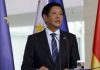




Bolivia’s newly sworn-in president Rodrigo Paz is standing firm on his sweeping fiscal reform agenda, which will see the abolition of gambling taxes in a dramatic reform of the country’s framework.
The plans are designed to attract fresh investment and revitalise South America’s lowest-GDP economy outside of Venezuela.
Elected in October, Paz and his Christian Democratic Party (CDP) ended the 20-year rule of the Movimiento al Socialismo (MAS), marking a decisive political and economic shift. His administration has pledged a complete overhaul of the national tax system, positioning reform as the cornerstone of Bolivia’s new growth strategy.
Paz has confirmed plans to abolish the national gambling tax as part of his newly approved Bill No. 1692, a sweeping fiscal reform package designed to overhaul domestic taxes to restore investor confidence and improve Bolivia’s low-yield levies.
Speaking in Cochabamba, Paz emphasised the proposal would eliminate taxes on gambling, financial transactions and corporate promotions — measures that collectively account for less than one per cent of total revenue but are costly to administer.
“These are inefficient taxes with little return, but they discourage investment,” Paz told state workers.
He added: “Getting rid of them is about efficiency, transparency, and restoring confidence in Bolivia’s economy.”
The reform is part of Paz’s wider push to modernise what he calls a “fragmented and punitive” fiscal system inherited from the previous administration.
It follows his earlier decision to repeal the wealth tax introduced by former president Luis Arce, which Paz claims led to the flight of nearly US $7 billion in capital from the country.
No MAS on Taxes
Finance Minister José Gabriel Espinoza said the government’s 10-year fiscal strategy focuses on simplifying the code, reducing distortions, and redirecting resources toward production and job creation.
“We need to eliminate ineffective taxes such as the gambling levy and channel those resources back into employment, investment and innovation,” Espinoza said.
The administration will also seek to reduce public spending by 30 per cent in the 2026 budget and introduce new tax incentives for export-oriented industries, aiming to reposition Bolivia as a more competitive regional economy.
Big change for small market
The Autoridad de Fiscalización del Juego (AJ), Bolivia’s gambling regulator, has yet to comment on the proposal. Observers expect little short-term fiscal impact, given the small scale of the country’s regulated gambling sector.
Currently, only one licensed casino operates legally in Santa Cruz de la Sierra, while most gambling activity — particularly online — remains unlicensed or offshore, leaving virtually no taxable base.
Under Law No. 060 (2010), all gambling must be state-authorised, and no domestic framework exists for online licensing. The AJ continues to enforce strict controls, seizing hundreds of illegal slot machines each year and cracking down on unauthorised online bingo operations.
Observers view the repeal of the gambling tax as a symbolic but meaningful reform, signalling recognition that Bolivia’s fiscal and regulatory frameworks have fallen behind the realities of today’s digital economy.
President paints new economic picture
While the government has given no indication of liberalising the gambling sector, the tax’s removal is seen as a confidence-building measure aimed at investors.
Paz’s message is clear: Bolivia intends to streamline its finances, cut bureaucracy and refocus on productivity — even in tightly controlled sectors like gambling.The president told his supporters:” Bolivia is building a more predictable and investment-ready economy, capable of delivering the stability that global markets have long sought.”