





Following months of delay, Portugal has concluded a concession process to award new casino venture contracts within authorised gaming zones.
Overseen by the regulatory office of Serviço de Regulação e Inspeção de Jogos (SRIJ), Portugal will expand its land-based casinos from 11 venues to 14.
The expansion follows months of protracted negotiations between SRIJ, Turismo de Portugal, the Ministry of the Economy and the state body of Territorial Cohesion.
Negotiations were drawn out on licensing costs, state tax returns, administrative delays and to ensure that the concession upheld compliance with procurement rules of the European Union (EU).
Portugal expects that the new concessions will generate more than €1bn in public revenues during their lifetime, alongside approximately €100.6m in upfront concession payments.
However, there was more at stake than the renewal of casino licences. Portugal was determining who would control some of its most valuable gaming assets for the next 15 years
The concession framework placed fiscal returns at the centre of the evaluation model. Operators were assessed on a structure weighted 50% towards the percentage contribution offered above Gross Gaming Revenue (GGR), 35% towards fixed annual concession payments and 15% towards guaranteed minimum variable contributions.
Portuguese authorities have designed the model to maximise long-term public revenues while also ensuring that operators retained capacity to invest in gaming facilities, operational continuity and tourism development.
Domestic incumbent Solverde has emerged as the dominant beneficiary, retaining the Algarve and Espinho concessions and reinforcing its position as Portugal’s leading land-based casino operator.
The Algarve package carries particular strategic significance, encompassing gaming assets in Vilamoura, Monte Gordo and Praia da Rocha, venues closely linked to Portugal’s tourism economy and southern hospitality sector.
For Lisbon policymakers, the concession cycle was about more than gambling, as the gaming zone of Algarve alone is projected to contribute close to €10m annually to state finances.
Bem vindo à Groupe Barrière
The defining development, however, emerged from northern Portugal.
French casino group Groupe Lucien Barrière secured the concession for Póvoa de Varzim, formally entering the Portuguese market and ending decades of near-exclusive domestic dominance within the country’s casino sector.
The development represents one of the largest structural shifts in Portugal’s land-based gambling industry in recent decades.
Portugal currently operates 11 casinos across authorised gaming zones, with ownership historically concentrated among domestic operators. International influence had previously filtered into the sector indirectly through Estoril Sol, whose ownership evolved through connections to the Macau gaming empire built by Stanley Ho, later linked to holdings associated with Pansy Ho.
Barrière has assumed control of Casino Póvoa de Varzim, a venue opened in 1934 located approximately 30 kilometres north of Porto, with ambitions to also extend its footprint beyond gaming operations.
The French operator will run the property which currently includes 500 gaming positions, 11 traditional gaming tables, hospitality facilities, a theatre with capacity exceeding 400 seats and approximately 220 employees.
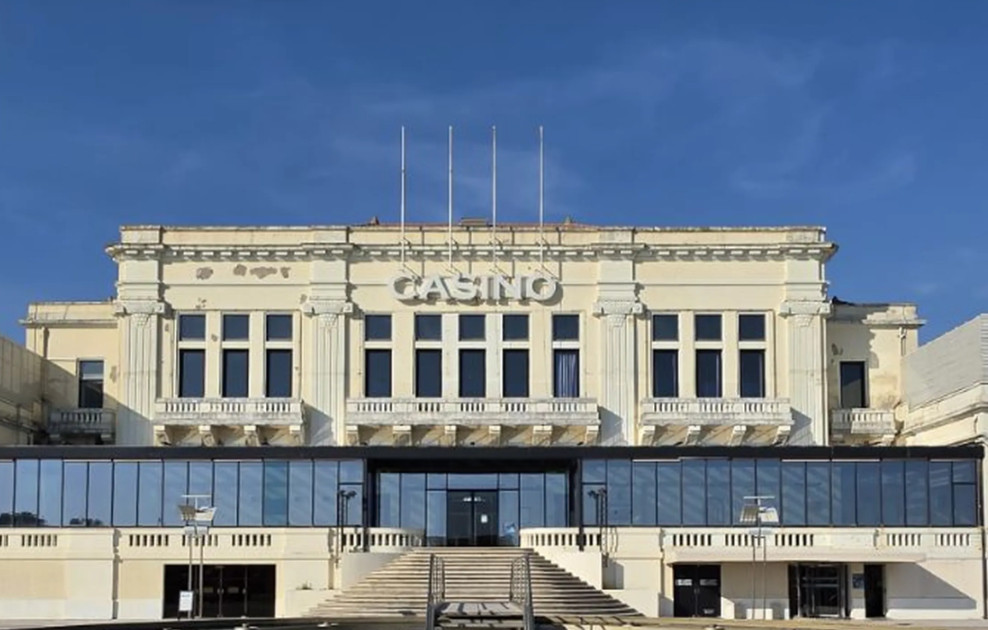
Clément Martin-Saint-Léon, General Manager Casino of Groupe Lucien Barrière, said: “Póvoa de Varzim brings together everything that makes the projects we develop unique: a place steeped in history, a dynamic destination and genuine transformation potential.”
He added: “Our ambition is to bring a contemporary vision of the casino — thinking of it as a complete entertainment destination where gaming interacts with gastronomy, live performance and the broader visitor experience.”
The group plans upgrades to gaming infrastructure, hospitality offerings and live entertainment programming while integrating the property more closely with tourism flows connected to Porto.
Grégory Rabuel, Chief Executive of Barrière, positioned Portugal within the brand’s wider international expansion strategy.
“This is exactly how Barrière approaches development today: evolving iconic establishments to unlock their full potential without losing their identity,” Rabuel concluded.
Portuguese authorities remain confident that the use of authorised gaming zones will play a key role in promoting the entertainment industry across the country, repositioning land-based casinos as a viable leisure and hospitality destination.