




As technology continues to evolve worldwide, the iGaming industry becomes more and more competitive every minute. In this scenario, technology solutions providers have turned into a crucial partner both for gaming operators and B2B suppliers.
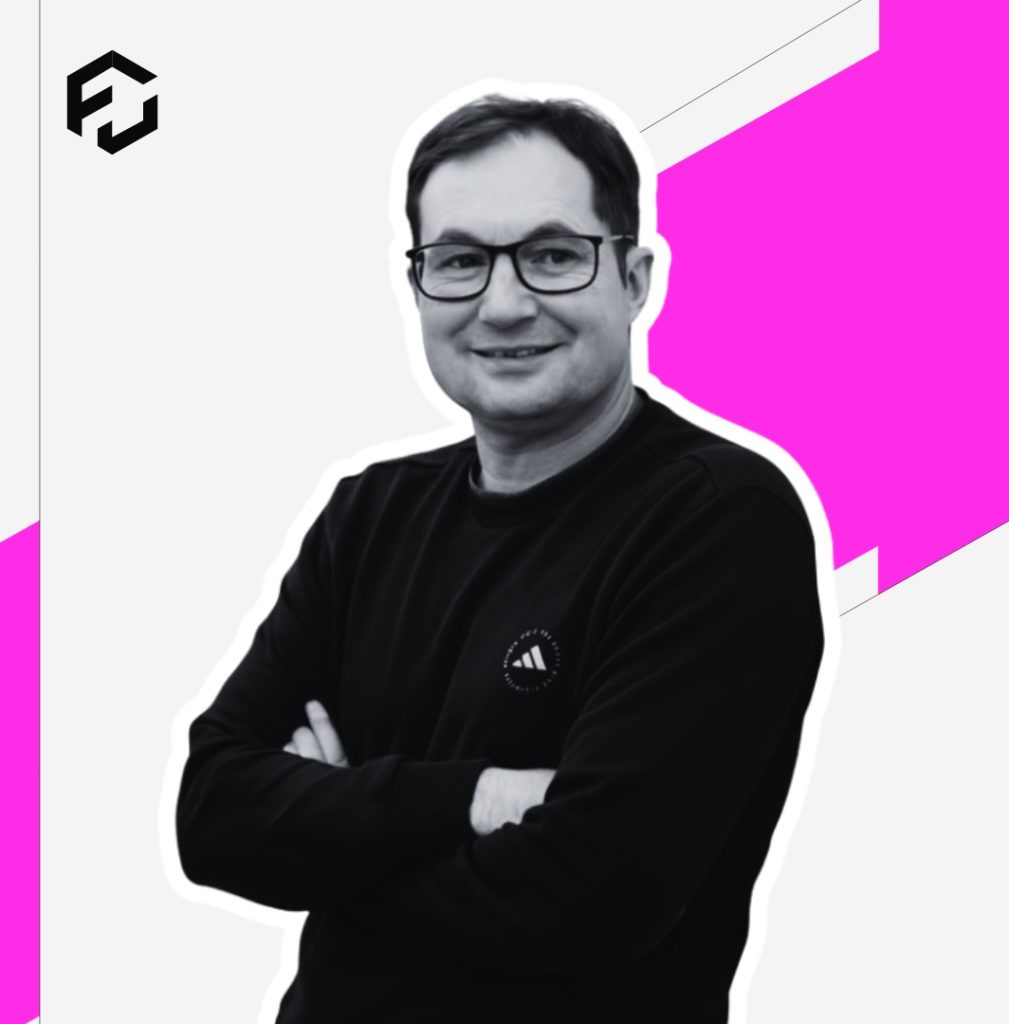
Dominic Le Garsmeur, Chief Product Officer at Fincore, breaks down how the company has turned into a benchmark in the segment, and tells iGaming Expert how clean coding architecture, artificial intelligence and working side by side with their partners has led them to success.
Agility and clean architecture: Fincore’s keys to success
“The speed of change of technology and products in gaming has been colossal, particularly in the last year. We have seen the impact of AI, we are seeing new kinds of products in the gaming space,” says Le Garsmeur. With sweepstakes and crash games taking over the casino space, and player props fighting for the sports betting share with prediction markets, he highlights agility as a must for a tech provider to have the relevant products that help partners in those spaces.
Fincore has their platforms built in modern tech stacks, which help them stay agile: “It is not just the technology itself. Our approach to building great products is to build things in a very modular, reusable way. That means that our customers can quickly embed parts of our products in their ecosystem, and we can quickly integrate their offering with the products on the other side. We act as a kind of glue or connector between partners,” the CPO says.
Being able to offer a quick solution like that is not easy, but Fincore has managed to keep a clean code philosophy, meaning that they can work fast and stay flexible to function.
“We do our agility through modern technology, great experience and great knowledge of the domain,” says Le Garsmeur, who warns how spaghetti code –built on layer after layer of complexity– can only be turned to a certain amount of times.
“There comes a point when you can’t just keep patching something up. It comes to the point where things stop working, or they become too complex,” he explains.
Working back to back with partners and understanding their needs
It’s not enough just having a clean, flexible product. The company believes a major perk their partners get when working together with them is “how open they are about how the technology works under the bonnet.”
While most providers may be reluctant to pull back the curtain, Fincore is prepared to do so: “We are because we trust what we have built, and we know that it has that quality,” the CPO adds.
With over 25 years of experience working together with over 30 brands in more than 20 regulated markets, Fincore puts trust at the heart of their philosophy. Together with a strong foundation to build the final product, that allows them to remain confident in being able to achieve the “really aggressive” targets their partners give them.
“The first thing we do when we work with the customers: we listen. That’s the key thing. We’re not just going there trying to sell something we have already built. We actually want to listen to their problems, and understand them,” says Le Garsmeur. “So, we listen to their technology problems, we listen to their process problems, and we fundamentally listen to the problems that are stopping them from succeeding with their players.”
However, not all partners want their problems turning into case studies, but prefer discretion instead: “We’ve been around for a while and built a reputation, but we are not always communicating what we do, and for a good reason. Sometimes people want to come to somebody they know they can trust. They can delve into our deep experience, and we can just work behind the scenes to help them solve more complex problems that they may not want to talk about.”
How AI helps pushing the boundaries
As “a product guy”, Fincore’s CPO speaks enthusiastically about the evolution of AI and its involvement in company processes.
“(AI) has completely changed the way we work as a development company right now in terms of how we build products. From how we refine and iterate on product ideas, and product discovery process, through to the way that we author, check and test code has been transformed,” he says.
However, he also asserts that their team is not just laying back while machines build the code for them, but actually treat this technology like “a really great intern”. That way, they feed off its help and good ideas, but it’s the senior team who is in control of the quality of the code that goes out, making sure they are keeping Fincore’s high standards.
“I find it transformative. We sit there with a product, working through ideas, and it helps us test out our ideas, and hypotheses a lot faster,” he celebrates.
Le Garsmeur explains that the company is increasingly embedding AI-driven models into live production systems, from customer service tooling to player segmentation and rewards. He notes that they partner with specialist AI providers that develop advanced solutions but require platform infrastructure to bring them to market. Fincore positions itself as the integration layer, enabling operators to implement these technologies effectively for their players, combining in-house expertise with carefully selected partnerships.
Moving forward
Looking ahead, operators are increasingly moving toward best-of-breed components to strengthen their tech stacks. But in Le Garsmeur’s view, selecting new modules isn’t enough on its own. “There’s a real shift toward composable platforms, which is positive,” he says. “But it’s not just about adding new features. If the underlying architecture isn’t clean, you’re simply layering complexity on top of complexity.”
Le Garsmeur adds that Fincore will continue evolving its core product suite, including its RGS, player account platform, sportsbook and bonus engine, with architectural discipline at the centre. Each component is built to operate as a clean, modular building block within broader ecosystems, strengthening performance and scalability without introducing hidden dependencies.
“For us, it’s about making sure best-of-breed actually moves the business forward,” he says. “Over the next year, we’ll be working behind the scenes for tier-1 operators and B2B suppliers. Simplifying integrations, strengthening the core, and making sure innovation scales without increasing risk or cost.”
With the industry evolving together with technology, he explains: “As the industry moves toward agentic systems and AI-driven interfaces, clean architecture becomes crucial. The platforms that will thrive in that world are the ones being built right, today. At Fincore, that’s exactly what we’re doing.”