




Mexico’s Government must listen to domestic stakeholders and foreign investors and guarantee the overhaul of an archaic gambling regime in a make-or-break 2026.
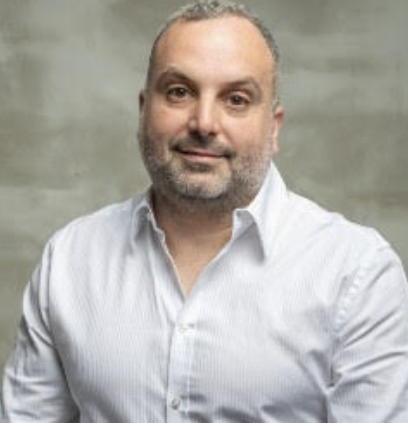
The demand comes from Aviv Sher, Chief Executive of Codere Online, who reflected at the SBC Summit Lisbon on the “local experiences” of a brand that has operated in Mexico’s iGaming market since 2014.
As one of the first settlers in Mexico, Codere Online has endured the ruptures of a licence governed by the Federal Law of Games and Lotteries of 1947.
The shortcomings of a 78-year-old framework are more visible than ever before, as President Claudia Sheinbaum seeks to squeeze additional revenues from the industry. Disclosed in September, Sheinbaum’s first state budget includes proposals to raise gambling taxes from 30% to 50%, a “sin tax” designed to collect MX$41bn ($2.5bn) to plug fiscal holes.
The industry has pushed back. AIEJA, the Mexican trade body for Gambling Licensees and Suppliers, has launched a national campaign to reposition gambling as an economic contributor in its own right, tied not only to casinos but also to technology, IT services and tourism – Sher “hopes that Claudia is ready to listen”.
The Local Experience
For Sher, “the stakes are always high”. The CEO told SBC Noticias that Mexico now accounts for more than half of Codere Online’s net gaming revenue, with the customer base rising from 50,000 monthly active players in 2023 to 85,000 in the latest reports.
“That kind of growth would not be possible in a mature market,” he said. “Mexico is structurally maturing, but there is still significant room for expansion.”
The firm’s latest results underline both promise and vulnerability. In the second quarter of 2025, Codere Online generated €55m in NGR. In local currency terms, revenues grew by 23% and active customers by 36%. Yet, these achievements were partly hidden by a 19% depreciation of the peso against the euro.
Sher noted that extreme fluctuations point to the fragility of the Mexican regime. “Currency instability hit our euro-denominated results, but in local terms our performance was strong,” he noted. “We can control our marketing and our customer offering, but not the peso.”
Currency swings, unpredictable taxation and the absence of modern legislation, all tied to a law from the 1940s, increase business risk. However, Mexico’s biggest threat is that around 60% of the market remains unregulated, draining tax revenues and exposing consumers to unmonitored operators.
Recognition over Punishment
Codere Online is clear about what it wants from policymakers: recognition, not punishment. “Mexico’s gambling law dates back to 1947,” Sher pointed out. “It simply does not address the realities of online gaming today.”
He believes that the industry should be treated as an “economic interest”, not merely a convenient target for fiscal raids.
The sector sustains skilled employment, underwrites software and digital services, and generates tourism flows through sport and entertainment. Treating it as a sin to be taxed, rather than a business to be fostered, risks stunting an industry that has shown remarkable resilience.
The company has reason to be hopeful. “We understand there is political will to promote a new Federal Gambling Law,” Sher said. “If implemented, it will help level the playing field and reduce the unregulated market, which remains far too large.”
Trust in Football
Codere Online’s response has been to deepen its roots in Mexican society, particularly through football. The company is the principal sponsor of Club de Fútbol Monterrey and recently extended the deal to cover its women’s team, Rayadas.
“Women’s football in Mexico is growing rapidly, and we see great potential in that audience,” Sher explained. “When you partner with a club, you support every aspect of its work. It allows us to reach new demographics and show our long-term commitment.”
The firm also leverages its international ties with Real Madrid, organising events that allow customers to play in iconic stadiums or meet ageing legends. These marketing investments are designed to build brand recognition in a crowded market and, more subtly, to convey reliability in an industry that suffers from image problems.
Sponsorships, Sher insisted, “work wonders when they are tied to unique experiences that create loyalty, not just visibility.”
Positive Legacy for World Cup 2026
The urgency of reform will grow as Mexico approaches the 2026 World Cup, which it will co-host with its neighbours – the USA and Canada. The FIFA World Cup will put a spotlight on Mexico’s institutional strengths and liabilities into sharper focus.
Hosting an event of such global stature cannot be treated lightly. As AIEJA cautions, the 2026 World Cup should not be seen as just another foreign benchmark of Mexico’s economic progress, but as a platform to modernise its sporting infrastructure and integrity against the black market.
Should gambling remain dominated by unlicensed operators or subject to sudden fiscal shocks, it will undermine the credibility of one of the few consumer industries where Mexico has attracted sustained foreign investment.
Codere Online, battle-hardened after its early struggles, insists it is ready for the challenge. “We have shown resilience in the past,” Sher reflected, “but long-term growth requires long-term certainty. What we cannot withstand indefinitely is uncertainty in the rules of the game. For Mexico to fulfil its potential as a global igaming market, stability is as important as growth.”