



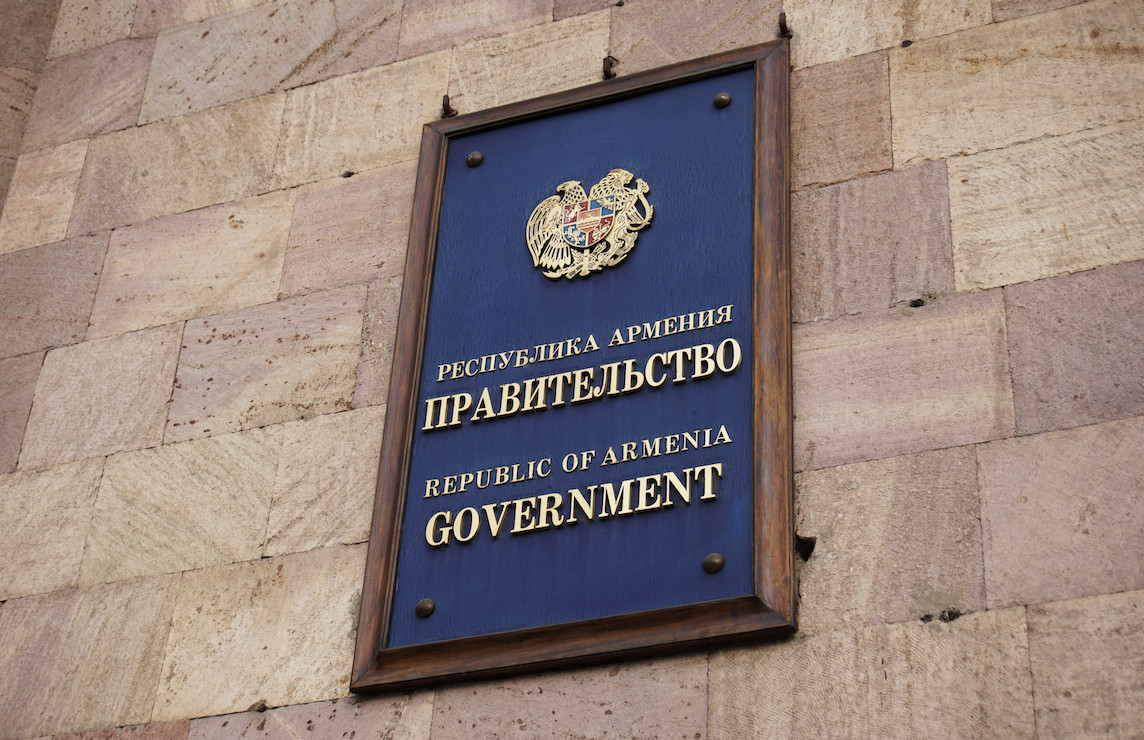
The Republic of Armenia is advancing on a twin-track gambling reform agenda that aims significantly expand player protections and limits while strengthening enforcement powers against unlicensed operators. Planned measures would introduce some of Europe’s most restrictive affordability controls in the gambling markets of the Caucasus/Eurasia region.
Ilya Machavariani, CEO and Senior Partner at 4H Agency, explains to iGaming Expert, the government of Armenia’s evolving its gambling laws and policies towards affordability-based regulation… Will neighbouring states follow?
________________

Recent Armenian gambling policy developments appear to be progressing through two separate but complementary legislative tracks: one focuses on player protection and affordability controls, while the other strengthens enforcement against unlicensed operators and enhances regulatory oversight of the market.
A detailed overview of gambling regulation in Armenia is available on the OnlyFacts database platform.
1. Draft 1281 of March 2026: player protection, affordability controls and self-exclusion
Draft No. P-1281-13.03.2026-TH-011 introduces a significant expansion of Armenia’s responsible gambling framework.
The proposal broadens the categories of individuals whose participation in gambling activities would be restricted or prohibited. In addition to existing limitations, the draft would cover:
- Individuals undergoing bankruptcy proceedings.
- Beneficiaries of state-funded or state co-financed subsidy programs.
- Recipients of any form of state social assistance.
- Individuals whose consumer loan obligations exceed 40% of their declared annual income.
- Persons who have reached retirement age where pension payments constitute their sole source of income.
Additionally, draft further requires all licensed online gambling operators to provide a clearly visible self-exclusion tool within their interactive gambling platforms. Self-exclusion requests will remain effective for five years from the day following submission, the term of which would also automatically renew for an additional five-year term unless the individual actively requests its removal beforehand.
Perhaps the most significant measure is the introduction of an affordability restriction based on declared income. The proposal states that a citizen’s permissible level of gambling participation would be limited to 20% of their declared annual income.
While implementing regulations would be needed to determine the practical calculation and enforcement mechanism, this provision, together with an exclusion mechanism, reflects one of the most restrictive concepts typically found in many European jurisdictions.
2. Draft 1327 of April 2026: enforcement against unlicensed operators and market control measures
Draft No. K-1327-20.04.2026-TH-011 is a broader government-sponsored package focused on market enforcement, technical supervision and restrictions on unlicensed gambling activity. The proposal introduces a comprehensive framework targeting offshore and unlicensed gambling operators.
- Website blocking – formal procedure for maintaining and administering a list of offshore gambling websites. Internet service providers would be required to block access to such websites in accordance with government-established procedures and deadlines. The proposal also introduces administrative liability for telecommunications operators that fail to comply with blocking obligations.
- Payment blocking – licensed Armenian payment service providers would be prohibited from processing payments in favor of unlicensed gambling operators through gambling-related merchant category codes (MCCs). In addition, Armenian banks and payment institutions would be required to restrict transactions involving the receipt or transfer of funds associated with unlicensed gambling operators and their brands.
- Monitoring system and technical compliance – the proposal prohibits the operation of gambling products that are not connected to the monitoring center operated under the regulatory framework (when the new regulator in Armenia is appointed, monitoring will commence) or do not possess the certification required by law.
- Advertising controls – before publication, gambling advertising would require prior electronic approval from the competent authority. The draft also prohibits advertising of unlicensed gambling operators and their websites within Armenia and across internet content accessible from Armenia.
Draft 1327 also clarifies several aspects of the existing framework, including the prohibition on unlicensed entities using gambling-related terminology in company names, trademarks, websites or signage; the cashless exchange of gaming chips through the player’s own bank or card account, except for foreign players; the rules on payment of monetary winnings by licensed operators; the definition of promotional lottery organizers; the financing and form of promotional lottery prize pools; outsourced promotional lottery arrangements; and minimum prize-fund requirements for certain lottery products.
Overall, this proposal is largely a clarifying and implementation-oriented package rather than a standalone overhaul of Armenia’s gambling framework. Its most important substantive innovation is the stronger enforcement mechanism against unlicensed operators, especially through website blocking and payment blocking by creating a dual enforcement model frequently used in more mature regulated gambling markets. While the existing law already contemplated restrictions on unlicensed gambling activity, the draft makes these tools more operational by requiring internet service providers, banks and payment institutions to restrict access and transactions under procedures to be set by the government.
3. Legislative status of reforms
At present, neither proposal appears to have completed the legislative process or entered into force.
Draft 1281 is available in a first-reading version and has already progressed through parliamentary consideration. Draft 1327 remains available as a government bill package.
Based on the available parliamentary materials, there is currently no indication that either proposal has been withdrawn, rejected or materially stalled. On the contrary, both initiatives appear broadly aligned with the Armenian government’s ongoing policy objective of increasing gambling oversight and reducing unregulated market activity.
Accordingly, the most likely next steps are continued committee review, subsequent parliamentary readings and, if approved, final enactment together with the necessary secondary legislation required for implementation. At this stage, both packages should be regarded as active legislative initiatives with a realistic prospect of adoption, although the precise implementation timeline remains uncertain.
4. Conclusion
Overall, the current reform package should not be viewed as a fundamental restructuring of Armenia’s gambling market. Neither the proposed player-protection measures nor the enforcement amendments materially alter the licensing model, market access rules or the competitive landscape for licensed operators. Instead, they reflect the authorities’ ongoing effort to tighten oversight, improve traceability of gambling activity and strengthen responsible gambling safeguards.
Armenian policymakers continue to view gambling as a legitimate but socially sensitive sector. As a result, regulatory initiatives are typically driven by consumer protection and social policy objectives rather than by a desire to encourage market expansion. At the same time, the authorities increasingly recognize that effective supervision is more practical than repeated restrictions or prohibitions, which explains the gradual shift toward stronger monitoring, affordability controls and enforcement mechanisms.
For licensed operators, the reforms are unlikely to create major commercial disruption. Their primary impact will be operational. Compliance obligations are expected to become more extensive and, in many cases, more costly to implement. This is particularly relevant because Armenia’s supervisory infrastructure remains only partially developed. Although legislation already provides for central monitoring architecture, the system is not yet fully operational, while many regulatory processes remain relatively manual compared to more mature European jurisdictions.
Consequently, the main effect of the current reform agenda is not a transformation of the market itself, but a gradual increase in regulatory complexity and operating costs for licensed operators.
A more detailed overview of Armenia’s gambling framework, market-entry requirements and practical operational insights is available on the OnlyFacts database platform.