



Last month, Gustavo Petro faced his biggest setback as President of Colombia, as the Humana government was ordered to repay ‘emergency taxes’ deemed to have been applied unconstitutionally.
Speaking to iGaming Expert, Juan Camilo Carrasco, managing partner of SORA Lawyers, has analysed the impact of VAT in Colombia and why its removal was so crucial to ensuring growth could resume in the market.
iGaming Expert: How important is it for the health of the Colombian market that Petro has been told to halt the 19% Value Added Tax?
Juan Camilo Carrasco: It was very important for the stability and health of the Colombian market that the 19% VAT measure was halted. The experience during 2025 showed that the impact on operators was extremely challenging, forcing many companies to implement aggressive retention and marketing strategies, particularly bonuses and promotional mechanisms to prevent users from migrating to the black market.
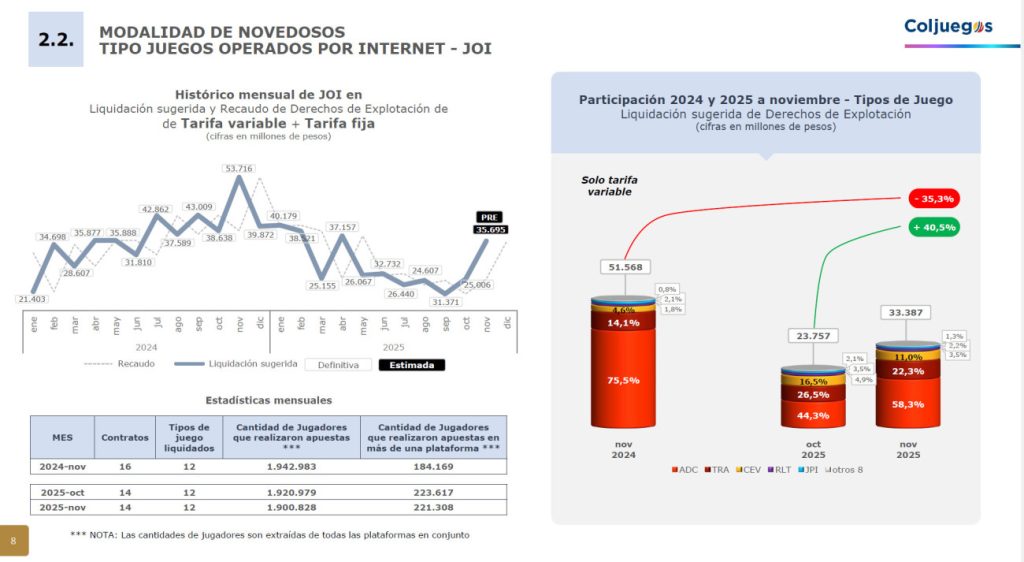
At the same time, official figures released by Coljuegos in 2025 reflected a significant decline in projected online gaming revenues compared to 2024 (see below tax collection), confirming the pressure that the tax generated on the regulated market. In practice, the measure increased operating costs, reduced competitiveness against illegal operators that do not pay taxes and created uncertainty regarding the long-term sustainability of the sector.
Many operators believe that, had the VAT remained in place under the same conditions, several companies would likely have been forced to reconsider their business models or even their continuity in the Colombian market within the following months.
Source: Coljuegos.gov.co
iGX: What impact did the tax have on operators seeking to grow in the market?
JCC: From our experience working closely with operators, the main impact of the VAT was the suspension of growth expectations across the market. Instead of focusing on expansion, new investment, or customer acquisition strategies, many operators were forced to concentrate their efforts on retaining and protecting their existing user base.
A significant portion of resources shifted toward loyalty and retention strategies, particularly bonuses and promotional mechanisms aimed at preventing users from migrating to illegal platforms. At the same time, the tax created an even more difficult environment when combined with the strong presence of unlicensed operators that continue operating without the same tax and regulatory burdens.
As a result, many operators placed growth plans on hold and adopted a much more defensive business approach throughout 2025.
How much of the tax rebate do you expect will be returned to operators?
The Constitutional Court ordered the DIAN and the Ministry of Finance to calculate and process the amounts that must be reimbursed to operators following the decision on the VAT measure. However, so far, the industry has not received formal information regarding the specific amounts or percentages that will effectively be returned.
Although the order comes directly from the Constitutional Court, we have not yet seen material progress in its implementation. In practice, situations like this usually require the sector to proactively engage with the relevant administrative authorities to ensure compliance with the Court’s decision.
At this stage, there is still no clear timeline or certainty regarding the percentage that operators will ultimately recover. Additionally, the current political and electoral context has shifted attention toward other priorities, which may also be contributing to the delay in implementation.
What can the regulated sector do to regain customer share forced to the black market during the 19% VAT era?
The regulated sector can recover market share by continuing to improve the user experience within licensed platforms, strengthening loyalty and retention programs, and increasing industry coordination to push for stronger action against illegal operators. Greater attention from authorities toward unlicensed platforms, particularly in relation to payment methods, blocking measures, and enforcement actions, will be essential to reduce the competitive imbalance that currently exists.
At the same time, operators must continue investing in customer acquisition and engagement strategies. The upcoming World Cup represents a major opportunity to attract new users, particularly for operators focused on sports betting, and marketing teams are already preparing campaigns and promotional strategies around one of the most important sporting events globally.
We also believe that educational and awareness campaigns will become increasingly important. Many users still do not fully understand the difference between licensed and unlicensed platforms. Reinforcing the value of playing within government-authorized platforms, where users benefit from regulatory oversight, payment guarantees, and data protection standards, will be key to strengthening confidence in the regulated market.
How can the Colombian government balance taxing the gambling market without damaging the future prosperity of the sector?
We believe that what occurred during this government has been an exceptional situation within the regulatory history of the Colombian market. For many years, and across different administrations, there was a clear understanding that gaming exploitation rights already constitute a significant and specific economic contribution to the Colombian healthcare system, which allowed the regulated market to develop and grow.
In recent years, that understanding of the industry’s particular tax structure appears to have been partially lost. Today, the sector already faces a considerable burden through exploitation rights and other tax and regulatory obligations, making the sustainability and viability of business models increasingly challenging.
Looking ahead, we hope there will be a broader understanding of the market’s dynamics and of the importance of maintaining a balanced tax framework that allows the industry to continue growing, attracting investment, and generating sustainable resources for the healthcare system without affecting the competitiveness of the regulated market.
How will investment in the market change now that the VAT has been removed?
The elimination of the 19% VAT represented a significant relief for the market and sent a positive signal for the recovery of the sector, particularly in terms of attracting new users and investment. Eliminating a tax that directly impacts players undoubtedly improves the competitiveness of the regulated market against illegal operators.
However, the situation is not entirely stable. The Government subsequently issued Legislative Decree No. 0240 of 2026 on March 12, 2026, within the framework of the state of emergency, introducing a 16% National Consumption Tax applicable to games of chance operated exclusively online. The decree established a particular tax structure for the online sector and raised several technical and practical questions regarding its implementation, especially concerning the taxable base and the reporting and collection mechanisms applicable to operators. As a result, although the VAT was eliminated, the market continues to face regulatory and tax uncertainty.
Additionally, this decree is currently under review before the Constitutional Court. This is particularly relevant because, in the decision that struck down the 19% VAT, the Court indicated that not every emergency situation is sufficient to justify the declaration of a state of emergency and the creation of taxes through legislative decrees. This position taken by the Court has been viewed by the sector as an important element within the constitutional analysis that will eventually be carried out in relation to Decree No. 0240 of 2026.
For the time being, the market remains attentive both to the practical implementation and applicability of the 16% Consumption Tax and to the final decision that the Constitutional Court will adopt regarding the validity of the decree.
How important is the reversal of the tax policy ahead of next month’s World Cup, given the level of betting engagement expected during the tournament?
The reversal of the tax policy ahead of the World Cup is extremely important for the Colombian market. Major sporting events such as the World Cup traditionally represent one of the strongest acquisition and engagement periods for online betting operators, particularly within the regulated sector.
Removing the 19% VAT shortly before the tournament improves the competitiveness of licensed operators, facilitates customer acquisition, and reduces the incentive for users to migrate toward illegal platforms during a period of exceptionally high betting activity.
At the same time, the World Cup creates a major commercial opportunity for operators to strengthen brand positioning, launch marketing campaigns, and attract new long-term users into the regulated ecosystem.
What’s the next development in the Colombian market that onlookers should be aware of?
One of the next major developments to watch in the Colombian market is the potential expansion of new gaming verticals and more flexible regulatory approaches for the online sector. Colombia continues to benefit from having one of the strongest and most business-oriented gaming regulatory frameworks in Latin America, which historically has positioned the country as a regional reference point for the industry.
A good example of this was the recent modification to the Instant Prize Games regulation through Agreement No. 01 of 2026 issued by Coljuegos. This reform broadened the regulatory framework applicable to these games and opened the door for additional game mechanics and dynamics, including crash-style games and similar products, which was viewed very positively by the market.
At the same time, we believe the industry and regulators will increasingly need to address the growing global discussion around prediction markets and similar digital products. This is a topic that is rapidly gaining relevance worldwide, and Colombia has an opportunity to play a leading role in the regional regulatory discussion given the maturity and experience of its gaming regulatory framework.
Overall, we remain optimistic about the future development of the Colombian market and the possibility of continued innovation, expansion, and regulatory modernisation within the sector.
How can Colombia learn from other markets across Latin America?
Colombia can learn from other Latin American markets by analysing how different jurisdictions have managed to attract a larger number of licensed operators while maintaining regulatory oversight and market stability. Although Colombia was the first country in the region to regulate online gaming and continues to have one of the strongest regulatory frameworks in Latin America, the number of licensed operators remains relatively limited compared to other markets.
For example, Peru has adopted a more open market approach and currently has more than 50 licensed operators. This shows the importance of finding a balance between strong regulation, competitive tax conditions, and market accessibility in order to encourage investment and formalisation.
Looking ahead, Colombia has the opportunity to continue strengthening its position as a regional leader by remaining open to innovation, regulatory modernisation, and the expansion of the regulated ecosystem.
……….
Carrasco will be speaking at the SBC Summit Americas 2026 next week. To secure your place at the event, choose from five ticket options tailored to different event experiences: Expo Pass, Conference Pass, Networking Pass, Business Pass and VIP Pass.Operators and affiliates may also be eligible for a complimentary pass.