

The Supreme Court of Chile faces further legal fallout over the enforcement of restrictions against online gambling operators.
Last week, SubTel, Chile’s national telecommunications agency, declared that it would no longer attempt to block access to unlicensed gambling websites.
The agency has admitted defeat, stating that it could no longer justify dedicating resources to uphold court-ordered IP blocking measures secured in favour of Polla Chilena and other municipal gambling operators.
In 2023, Polla Chilena won a federal appeal ruling seeking to impose restrictions on online gambling operators, as Chile’s government remained unable to finalise terms for a long-delayed online gambling framework.
The appeal was challenged by Chilean media stakeholders and later escalated to the Supreme Court, which ultimately ruled that “online gambling in Chile is illegal unless expressly authorised by law” and ordered telecom providers to block access to offshore betting sites — a directive to be enforced by SubTel.
No longer able to fulfil the mandate, SubTel cited that “these operators simply shifted to new domains once blocks were imposed”, exposing how the ruling targeted web addresses rather than the betting platforms themselves.
The message was relayed to the Supreme Court by Romina Garrido, Chile’s Undersecretary of Telecommunications, who stated that the agency could no longer sustain restrictions secured by municipal operators such as Polla Chilena.
Garrido warned that enforcement actions were consuming significant resources from an overstretched agency already caught in the prolonged stagnation of Chile’s online gambling regulation debate.
Appearing before the Constitution Committee of the Chamber of Deputies, Garrido stressed that SubTel was never formally a party to the legal proceedings and therefore lacked direct authority to execute the ruling beyond coordinating technical compliance with telecom providers.
Despite this, Supreme Court judges demanded to know whether any “blocking campaigns had produced meaningful results”.
The collapse of the enforcement strategy has intensified political divisions over Chile’s gambling future. Some deputies argued that the Supreme Court’s ruling must continue to be enforced regardless of operational challenges, while others maintained that the focus should shift to re-initiating Chile’s path to launching an online gambling regime, mirroring developments in other South American jurisdictions (Brazil and Colombia).
Jaime Mulet, President of the Finance Committee, defended continued scrutiny of the matter, stating that judicial rulings “must be complied with”, even as the practical limitations of enforcement become increasingly obvious.
In contrast, Evópoli deputy Jorge Guzmán argued that Chile’s priority should be advancing regulation through Congress, rather than forcing SubTel into a technologically unwinnable campaign against offshore domains.
Kast begins austerity negotiations
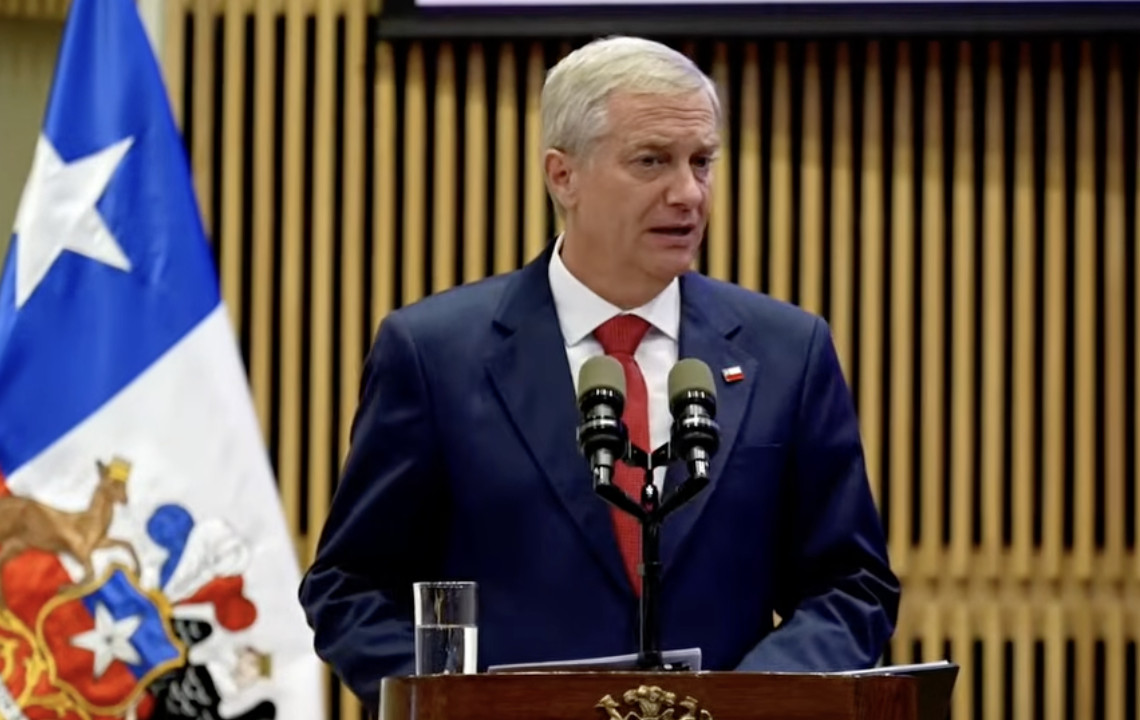
Attention now turns to the new cabinet of new President José Antonio Kast, who assumed office in March 2026.
Kast leads the “Republican Alliance” the conservative coalition in the National Congress. Yet on gambling policy, the four party coalition bloc are reported to hold deep divisions over the regulatory pathway of online gambling in Chile.
The divisions centre on the licensing structure of Chile’s online gambling bill, with some ministers seeking to preserve online privileges for municipal operators while limiting the number of licences granted to international operators.
Concerns are emerging that Kast could use the settlement of Chile’s online gambling framework as a bargaining chip to support the drastic spending cuts budget that formed the centrepiece of his 2025 election campaign.
Mirroring other conservative South American governments, Kast has stated that he will undertake a review of unnecessary agencies and policies deemed to be hindering economic growth. Overall, the President is seeking to impose a 3% reduction in spending across all Chilean public departments.
In year one, Kast aims to generate cost savings of $8bn, with the figure projected to rise to $21bn annually by the time of the next election.
For Chile’s Supreme Court, the SubTel admission represents an uncomfortable reality check. While the judiciary succeeded in declaring offshore online gambling unlawful, the practical ability to enforce that judgment in a borderless digital marketplace now appears increasingly limited.


