

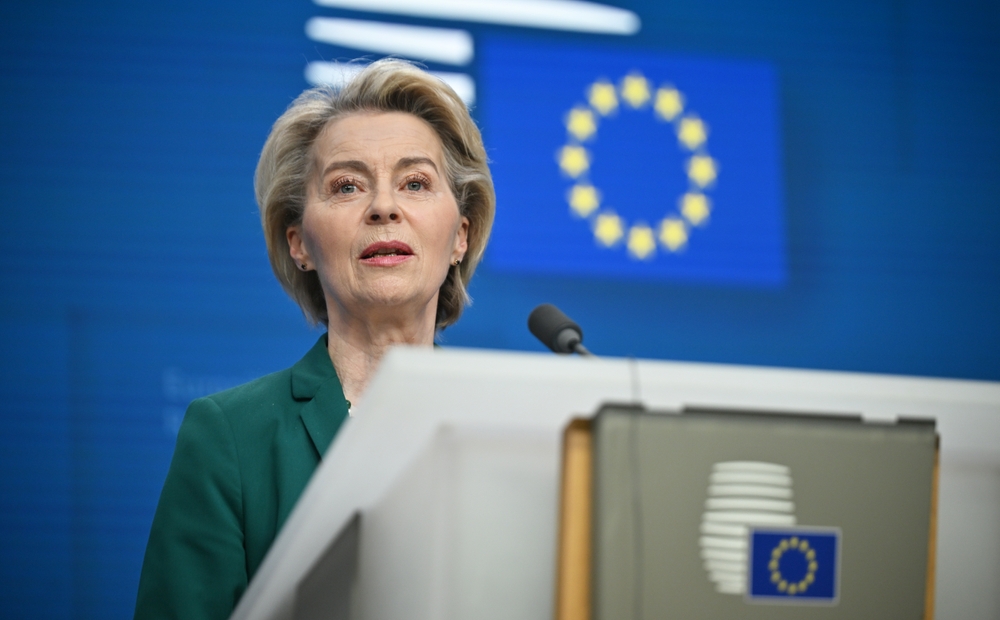
The European Commission (EC) is expected to present its plans to enforce a European-wide minimum age for social media platforms and introduce further mandatory online child protections and duties.
The matter of online child protections and rights are deemed to be at the top of the agenda for EC President Ursula von der Leyen, who stands as Europe’s strongest advocate for applying stricter rules to online platforms and digital environments.
As reported, von der Leyen is expected to announce the Commission’s proposals on EU-wide child online protections as part of her State of the Union address on 16 September, as she prepares to welcome MEPs back to Strasbourg following the summer recess.
The Commission President has previously expressed her support for introducing “a delay to under-16s engaging with social media platforms” – these proposals are expected to take this support to the next level.
EU states call for action
Concerns have been raised by multiple political blocs over whether online and social media platforms have the technical capabilities and legal jurisdiction to protect children from harmful content, unsafe interactions or developing online disorders.
The legal mechanism for an EU-wide ban on under-16s has not yet been determined. However, the framework is expected to establish a minimum age threshold, mandatory parental consent for child users and a common age verification standard for online platforms.
Across EU member states, the debate over an under-16 social media ban continues. France, Spain, Germany, Denmark and Greece have all committed to introducing restrictions, with France expected to become the first member state to implement new rules from 16 September, followed by Spain.
No longer part of the Union, the UK is scheduled to introduce its own ban, which will be enforced from spring 2027 under legislation signed by outgoing Prime Minister Keir Starmer. However, the measures have been criticised by opposition parties as an example of the Labour government’s overreach and an encroachment on the freedoms of British teenagers.
Common laws & duties
The proposals arrive as child online protection has become one of the defining digital policy issues across the Union, attracting support from political groups spanning both the European Parliament and national governments.
Concerns over children’s exposure to harmful content, cyberbullying, online grooming and the addictive design of social media platforms have shifted the debate from voluntary industry standards towards statutory protections.
Attention now turns to 13 July, when the European Parliament and the Commission will receive the findings of an independent advisory panel established by von der Leyen to assess how children should be better protected online.
The panel will publish recommendations on age verification, parental controls, platform commands and wider digital safeguards, providing the policy foundation for the Commission’s legislative proposals due in September.
Alongside new restrictions, the Commission continues to advance its European age verification app, which it confirmed in April is “ready for deployment across the bloc”.
The app has been designed to provide a common European standard for proving a user’s age online. Its design allows citizens to verify their age without disclosing unnecessary personal information, enabling platforms to enforce age restrictions while preserving user privacy.
The Commission has stated that the technology is anonymous and privacy-preserving, compatible with any device and fully open source, allowing EU member states and partner countries to integrate the system into their own digital identity frameworks.
As Brussels seeks a common European solution, the regulation of digital platforms and the advertising they carry – including online gambling advertising – will come under heightened scrutiny as policymakers look to establish consistent child protection standards across the bloc.


