

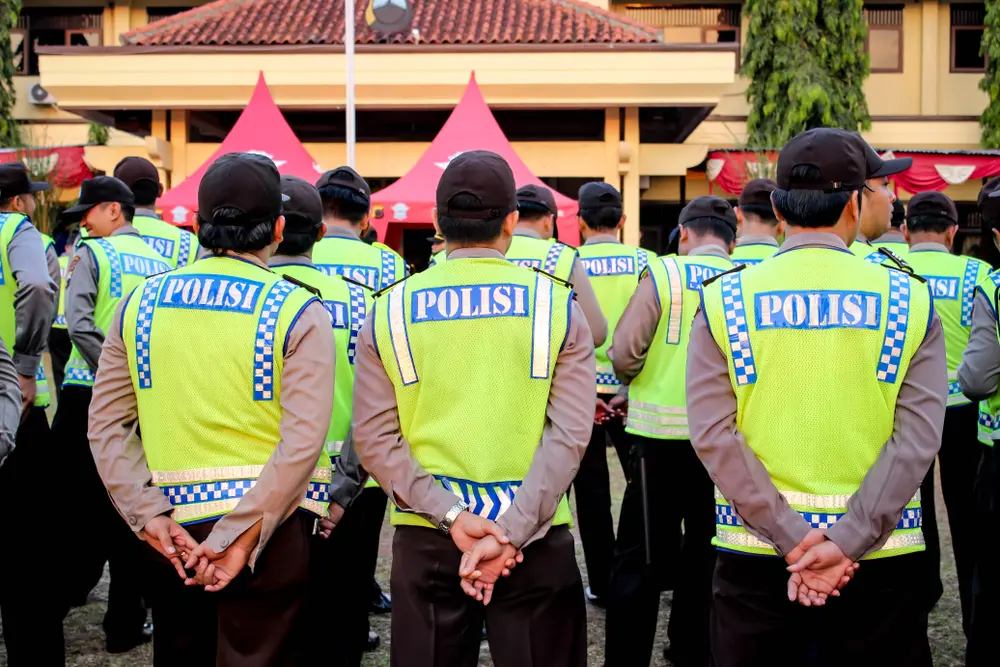
Police raids in Indonesia have led to the arrest of more than 300 foreign nationals, who have allegedly been involved in illegal online gambling operations.
Of the 321 arrested in Jakarta, 228 were from Vietnam, according to reports from AP News. A further 57 were from China, and the rest came from Laos, Myanmar, Thailand, Malaysia and Cambodia.
Wira Satya Triputra, the Indonesian Police’s Director of General Crimes, claims that the gambling hub located close to Jakarta’s Chinatown section was responsible for over 70 online gaming websites that have been targeting international players.
He also said that workers were assigned roles such as customer service, telemarketing and finance administration; the evidence gathered suggested that the location had been up and running for around two months.
Assets – including cash in multiple currencies, computers, mobile phones and passports – were seized during the raid.
The Indonesian Police believe that the majority of the suspects arrested entered the country using short-term visitor visas.
All forms of gambling are illegal, and those arrested during the raid could face up to nine years in prison and a fine of 2bn rupiah (£85,352).
Part of a wider strategy to fight unlicensed gambling
Despite the prohibition, authorities in Indonesia have been forced to confront the scale of the country’s black market.
Indonesia’s Financial Transaction Reports and Analysis Centre (PPATK) has estimated that 422.1 million online gambling transactions took place in 2025, with a total deposit value of 36trn rupiah (£1.52bn).
It is believed that many of the sites targeting players in Indonesia, and the wider Southeast Asian region, are based in the nearby countries of Cambodia and Myanmar.
However, Untung Widyatmoko, secretary of Indonesia’s Interpol bureau, said that these most recent arrests, along with the discovery of transnational crime organisations in other parts of Indonesia, such as Surabaya, Bali and Batam, indicate a shift in criminal behaviour as authorities in other countries begin to take greater action.
He told the local news outlet Kompas: “After enforcement measures in Cambodia, we started to see a shift toward Indonesia, and that was something we anticipated.”


