

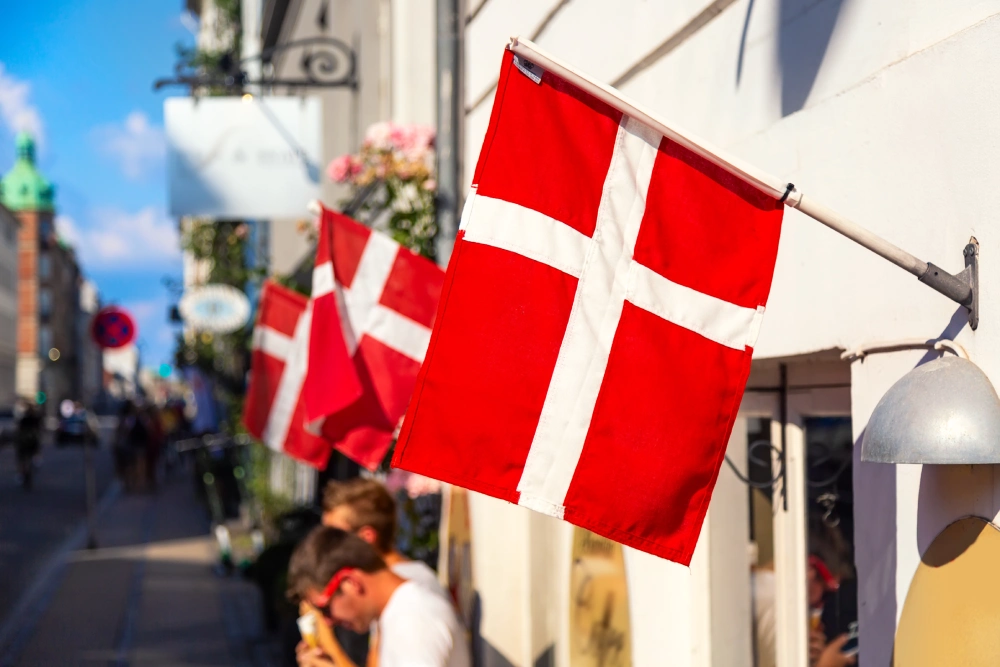
Denmark has long been held up as Europe’s gold standard for channelisation, but can that reputation survive a new era of tighter gambling advertising restrictions? As regulators seek to strike a balance between player protection and market competitiveness, fresh questions are emerging about what keeps players in the regulated market. Scott Bowen, Editor at online-gambling.com, analyses for iGaming Expert whether Denmark’s success story is about to face its biggest test yet.
When Denmark scrapped its online gambling monopoly in 2012 and opened the market to licensed competition, roughly 28% of online play was still running through sites with no Danish licence. By 2019 that share had fallen to 8%, according to the European Gaming and Betting Association. That left a channelisation rate in the low-90s%, still among the highest anywhere in Europe.
It is a figure the Danish industry has earned, and one that regulators from Helsinki to The Hague reach for whenever they want to show what a well-run liberalised market looks like. It is also a figure that is easy to treat as permanent. The reforms now moving through Copenhagen are a useful reminder that channelisation is something a market builds and has to keep rebuilding, not a fixed property it gets to keep.
A rate built on design, not luck
Denmark did not stumble into high channelisation. For years its market sat behind a state monopoly, with a meaningful slice of online play leaking to international sites the authorities had little practical grip on. The 2012 switch to an open-licensing regime introduced genuine competition, and competition gave players licensed products worth using rather than working around. Spillemyndigheden, the country’s gambling authority, now reports a market worth around DKK 10.3bn in gross gaming revenue, with online casino accounting for roughly 30% of that total and online gaming machines making up about three-quarters of the online casino take. The regulator’s monthly market statistics have tracked online verticals climbing year on year, a pattern iGX has followed through successive quarterly figures.
The detail that tends to get lost is why the offshore share collapsed from more than a quarter of the market to single digits in seven years. It was not enforcement alone. It fell because, for most Danish players, the licensed option quietly became the easiest one to reach and the one they were most willing to trust.
Protection that legitimises the offer
Part of that trust is consumer protection players are willing to use rather than evade. Winnings from licensed Danish operators are tax-free in the player’s hands, removing a point of friction that nudges gamblers offshore in markets where the tax treatment is murkier. ROFUS, the national self-exclusion register, lets a player block themselves across every licensed site at once; more than 60,000 people have now signed up, with the StopSpillet helpline sitting alongside it.
None of this registers as a constraint to the average user. It registers as a market that behaves predictably, and a predictable, licensed market is one people are content to stay inside. Protection, counter-intuitively, works as a retention tool as much as a harm-reduction one.
The supply side does the quiet work
Protection and tax treatment set the conditions, but retention ultimately turns on whether the licensed shelf is worth shopping from at all. Channelisation also rests on supply: when the operators now licensed to serve Danish players already offer the breadth of games, payment options and payout terms players want, there is little reason to drift toward unlicensed alternatives that promise the same thing with none of the guarantees.
That is the part of the equation most exposed to policy. A licensed market holds its players only for as long as the licensed experience stays competitive with whatever sits one search result away.
The advertising question
Which is what makes the current reforms worth watching rather than waving through. Denmark is introducing a whistle-to-whistle ban on gambling advertising around live sport, with full enforcement scheduled for 1 January 2027 and broader limits that reach imagery featuring anyone under 25, advertising near schools, and the use of celebrities and influencers. The rationale is not hard to follow. The government estimates around 500,000 Danes experience some degree of gambling harm, and the pressure to tone down sports-broadcast saturation has built for years. This publication has followed the debate closely.
The open question for operators is what tighter visibility does to the onshore pull the channelisation figure depends on. Cutting licensed advertising lowers harm exposure, which is the point, but it can also lower the salience of the regulated brands that compete with the black market for a player’s attention in the first place. A player who no longer sees licensed operators around live sport does not stop gambling; the only question is whether the site they reach for next holds a Danish licence. The Netherlands, where channelisation is estimated at closer to 45-50%, is the cautionary case: restriction brought in without proportionate enforcement tends to soften the rate rather than hold it, and once players relearn the offshore habit it is slow to reverse.
Denmark starts from a stronger position than most. Its enforcement capacity, its tax structure and the maturity of its licensed offer give it more room to tighten advertising without immediately bleeding players offshore. The lesson for the markets watching is narrower than “copy Denmark.” It is that a 90-plus channelisation rate is a balance of supply, protection and visibility, and that pulling one lever without watching the other two is how a benchmark stops being one.


