

BetBlocker Chief Executive Officer Duncan Garvie warned that the gambling support industry is at risk of losing significant knowledge and expertise as a result of the recent funding allocation from the Office for Health Improvement and Disparities (OHID).
Garvie broke down the process of applying for the OHID’s VCSE Gambling Harms Prevention and Resilience Fund on the latest episode of iGaming Daily after BetBlocker was awarded £1.12m in funding to provide its support services in the UK.
The OHID has allocated £25.4m to 33 voluntary, community and social enterprise organisations that provide gambling harm support across England. However, Garvie raised his concerns that expertise and knowledge could be lost as the UK transitions into a new era for safer gambling funding.
He said: “I’ve said publicly already that this has been a very bittersweet few weeks for us. Look, we’re thrilled to get that certainty and that security of funding, but I’ve watched so many peers, people I’ve learned from, people who have taught me in this space, organisations whose work I have thought really, really highly of getting really hard outcomes from this.
“I remain optimistic and I hope for the best for the future, but I’m not going to say that I don’t feel that there’s been some real blows to the support infrastructure with some of the funding decisions. My heart goes out to all of these organisations and if there’s anything that I, or BetBlocker, can do to support them in this tough period, I’m saying this to anyone listening: please just reach out to me.
“I don’t know what we practically can do, but we’re willing to try. I do not doubt that the new system will account for the needs of the end users and will ultimately, once a transition period is through, work in the best interests of users, but in the interim, I think we risk losing a lot of knowledge and expertise in the space.”
Under the bonnet of BetBlocker’s OHID process
Alongside BetBlocker, other notable organisations that received OHID funding included GamCare (£4m), YGAM (£3m), Betknowmore (£2.99m) and Gambling Harm UK (£1.25m). A myriad of local Citizens’ Advice Bureaus were also issued funding.
Garvie noted that BetBlocker went through a rigorous process to secure the OHID, providing evidence about how the service would operate in the UK, including demonstrating its independence from industry influence.
This required splitting the organisation into two separate entities – UK and International – and the departure of some board of trustee members.
Garvie stated: “BetBlocker is an international organisation. We provide support to users all over the world. The UK is a very important market for us and it certainly is where we were founded; it’s our birthplace, but it actually represents only about 6% of our users overall. That means that while we were happy to engage with the funding system in the UK, we still need to be able to find funds to support the other 94% of our users outside of the UK.
“It’s great that the UK system has matured to a place where it can create a funding system that is independent from the industry directly, but outside of the UK, those funding systems just do not exist yet. We had to spend a lot of time effectively building out a road map to how we would move to a place where we can operate without industry funding, and that’s going to require huge organisational changes.”
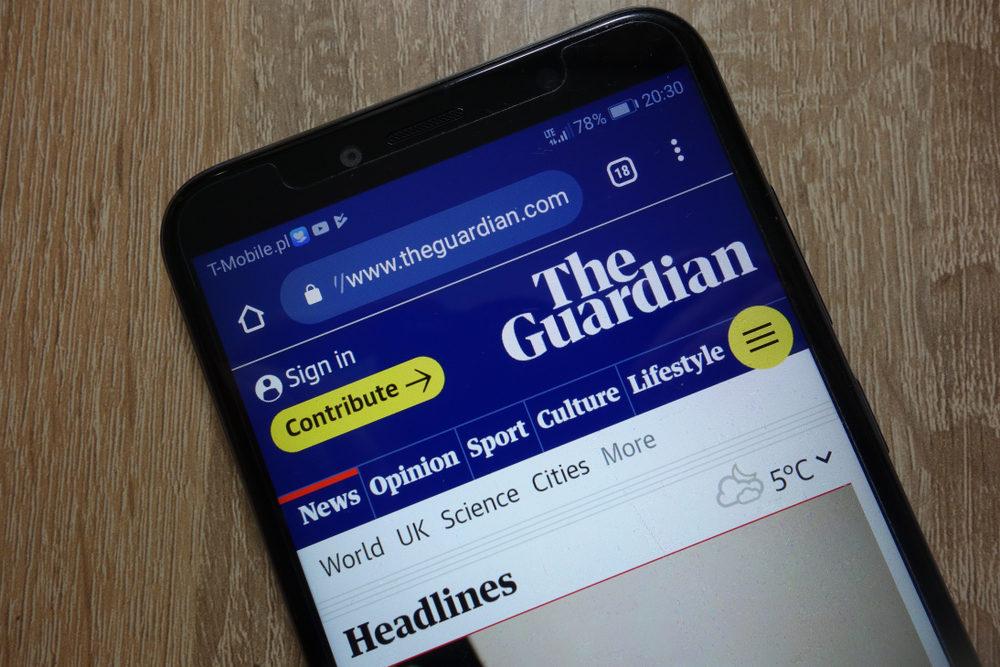
Questions from The Guardian
BetBlocker was queried by The Guardian news outlet about its OHID funding allocation, to which Garvie publicly answered the questions received on his LinkedIn to make sure that his and the organisation’s message was clear and transparent.
Speaking about it to iGaming Daily, Garvie said: “I don’t really feel it was BetBlocker that was being scrutinised. I think that the attention we received from The Guardian’s journalist was really more targeted at raising concerns about the rigour of the OHID application process. It was rooted in what they felt were disparities in the stated priorities of OHID’s and BetBlocker’s model, specifically, industry independence.
“The scrutiny was really rooted in implications being made based on a lack of knowledge of what’s actually been going on. From our perspective, the best solution to that was to simply be open, honest and transparent about the process and what we had had to do to get approval. Sunlight is the best disinfectant. If you simply fill in the information gap, then assumptions and implications no longer really have room to take root.

“All of it, to my mind, was really more about looking to question the integrity of OHID’s process, more than it was criticising BetBlocker. We were just a useful tool to advance that story, advance that line of questioning. The truth is, once you actually look at the changes we had to agree to to get through the application process, the questions, while legitimate if you don’t know the details of the application process, the questions are very quickly answered.”
Garvie continued: “That’s not how I would prefer to have dealt with that situation. It’s not how I like to conduct myself ordinarily and it’s not how BetBlocker would prefer to present itself, but we do understand there’s a limitation to print journalism. Where I would provide a 2,500-word response, really going into the details of the answers for each question, if we were lucky, only 10% of that was going to make it into the final article.
“It just seemed better for us to publish a response rather than provide it to the journalist and only see parts of that reflected in the finished article. I did not enjoy that. That was not a moment that I will reflect on positively in the future.”
Also on the iGaming Daily episode, Garvie spoke about the impact of GambleAware’s closure on the wider support sector, as well as his optimism for the future of safer gambling support in the UK market.
Want to hear more stories like this? Check out the new SBC Media YouTube Channel, the new home of all things multimedia at SBC, where our team deep-dives into the biggest stories from across the sports betting, iGaming, affiliate and payments industries.


