



The Argentine gambling industry has shifted its focus onto its Code of Conduct for gambling promotions as Buenos Aires fumbles its regulatory mandate once more, reports SBC Noticias Damian Martinez.
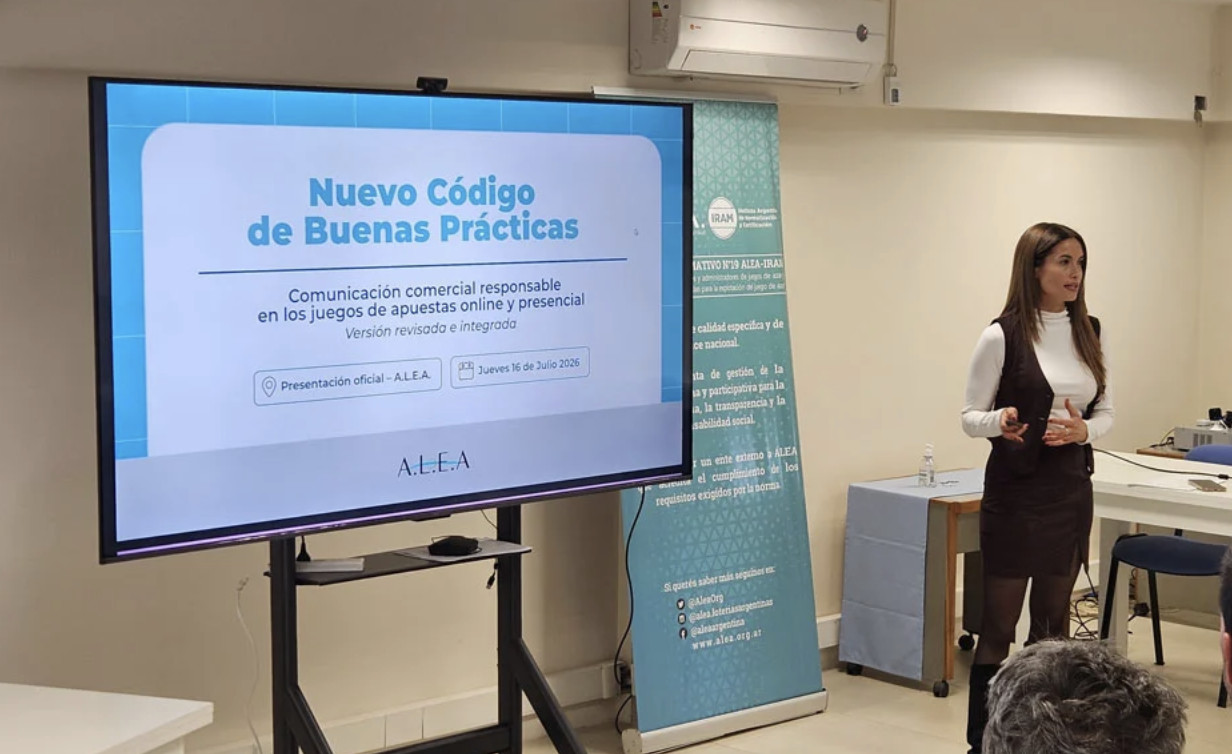
Argentina’s gambling licensees will move ahead of the government by adopting a new “Código de Buenas Prácticas” (Code of Good Practices) which seeks to establish common standards for the communication and promotion of gambling activities across online and land-based businesses.
The directive is being led by Ida López, President of ALEA (Asociación de Loterías, Quinielas y Casinos Estatales de Argentina), the association representing Argentina’s provincial gambling regulators and state lottery authorities.
López unveiled ALEA’s Code of Good Practices to SBC Noticias as part of a new initiative designed to strengthen consumer protection and establish sustainable advertising standards across ALEA’s network of 24 provincial gambling authorities.
Sense & sensibility for Argentine marketing
The voluntary code sets out ‘common principles’ for gambling advertising and marketing to be promoted in a sustainable manner to protect Argentine youth and vulnerable audiences.


López said that the Code will establish “principles, criteria and guidelines for good practices applicable to the commercial communication of gambling” while providing “regulators and licensed operators with a practical framework that can later be incorporated into provincial regulations, licence conditions and contractual obligations”.
The guidelines will apply to all forms of B2C marketing, including the use of advertising agencies, affiliate networks, performance marketing platforms, media companies, influencers, streamers and brand ambassadors.
The Code will also be extended to the B2B sector as it looks to codify standards for technology providers, game studios and solution suppliers that are currently working within Argentina’s regulated online gambling market.
Advertising must clearly identify the licensed operator and, where appropriate, the issuing jurisdiction, while ensuring all messaging is responsible, and does not portray misleading information or messages about gambling activities, products or promotions.
López stressed that gambling advertising must always reflect its wider social responsibilities: “Commercial communication must be conducted in a socially responsible manner that does not promote harmful or pathological gambling behaviour, while presenting gambling solely as an entertainment activity for adults, within reasonable limits and supported by sufficient information.”
She added that operators and their commercial partners should implement “reasonable, proportionate and verifiable measures to prevent the exposure, recruitment or inducement of minors and vulnerable individuals”, including self-excluded customers and players displaying signs of gambling harm.
For López, the protection of Argentine children and young people cannot wait for political consensus in Buenos Aires, forcing ALEA to move forward on its Code of best practices
She argued that regulators and licensed operators have an immediate responsibility to strengthen safeguards across every jurisdiction, with the Code providing provinces with practical guidance that can be adopted immediately while broader legislative reforms continue.
BA drags its heels
The initiative comes as Argentina enters its third year without a unified federal framework governing gambling advertising.
As it stands, Congress has spent nearly three years debating legislation that would introduce nationwide restrictions on gambling advertising, sponsorships, celebrity endorsements and digital promotions.
Approved by the Chamber of Deputies, the proposal will establish Argentina’s first comprehensive federal regime governing gambling advertising and significantly expand protections for minors.
However, despite repeated calls for urgency, the legislation remains stalled in the Senate – with no ministers or political parties willing to present a final bill.
Among its strongest advocates are Buenos Aires City Mayor Jorge Macri and Deputy Maximiliano Ferraro, who have consistently argued that Argentina requires a coordinated national strategy to combat youth gambling and reduce minors’ exposure to gambling content.
Macri has been particularly outspoken over failures within the retail gambling sector, criticising venues that allowed thousands of underage customers to bypass age-verification controls and access slot machines.
His administration has since intensified enforcement against illegal gambling operators, influencers promoting unlicensed gambling websites and breaches involving underage gambling, while continuing to press for a federal advertising framework.
Coordinated action plan
Against this backdrop, ALEA’s Code represents the first coordinated action by Argentina’s provincial gambling authorities to establish common advertising standards regardless of whether federal legislation is ultimately enacted.
The voluntary framework will require all commercial communications to adhere to the principles of responsibility, transparency, legality, clarity and consumer protection.
The code also states that advertising should not exaggerate the benefits of gambling, distort perceptions of risk or encourage excessive gambling behaviour, while remaining consistent with Argentina’s consumer protection, data privacy and child protection legislation.
The Code also seeks to reinforce the distinction between licensed and illegal operators as provincial regulators intensify enforcement against black-market gambling websites.
It simultaneously exposes one of the structural weaknesses of Argentina’s responsible gambling framework.
Although online gambling is regulated in jurisdictions including Buenos Aires City, Buenos Aires Province and Mendoza – each maintains its own responsible gambling programme and self-exclusion register.
The absence of a unified national self-exclusion database leaves player protections fragmented across provincial borders, resulting in inconsistent safeguards for vulnerable consumers.
While ALEA’s voluntary Code cannot harmonise those regulatory systems, López believes it establishes a common baseline for responsible commercial communications across Argentina’s regulated gambling market.
As federal lawmakers continue to debate a national advertising framework, Argentina’s provincial regulators have chosen to act first—placing the protection of children, young people and vulnerable consumers at the centre of a voluntary standard that could ultimately shape the country’s future gambling advertising regime.


